


Cobalt Ore Solution
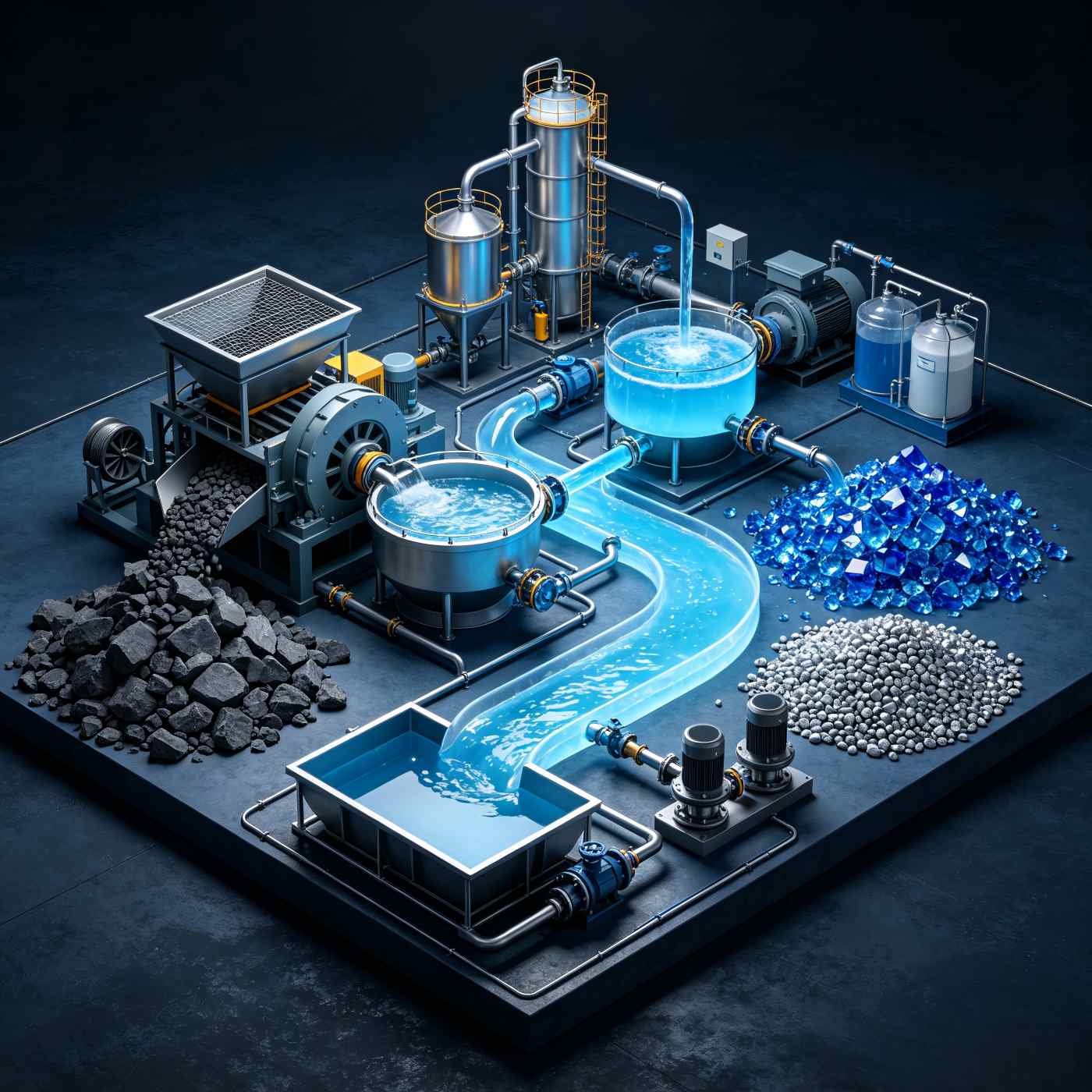
The Cobalt Ore Solution developed by FKN PANDA is designed to improve recovery efficiency in complex cobalt ore beneficiation processes. It provides integrated flotation and chemical systems for polymetallic cobalt-bearing deposits.
This solution is widely applied in modern mining operations where cobalt is often associated with nickel, copper, and other valuable metals in complex ore structures.
Challenges in Cobalt Ore Processing
Cobalt ores typically occur in polymetallic systems with complex mineral intergrowth, making selective separation difficult using conventional flotation methods.
Key processing challenges include:
Low recovery of fine cobalt-bearing particles
Strong association with nickel and copper minerals
Complex polymetallic separation difficulty
Unstable flotation performance in variable ore conditions
Integrated Cobalt Processing System
The Cobalt Ore Solution integrates multiple flotation and chemical systems to enhance cobalt recovery across different ore types and processing conditions.
Core system integration includes:
Fine Particle Recovery System for ultra-fine cobalt minerals
Clay & Slime Control System for stable flotation conditions
Complex Polymetallic Separation System for mixed cobalt ores
Oxide & Refractory Ore System for difficult cobalt deposits
Processing Mechanism
The system improves cobalt recovery by enhancing mineral surface activation and optimizing selective flotation between cobalt-bearing minerals and associated metals.
Main functional improvements:
Improved flotation response of fine cobalt particles
Enhanced selectivity in polymetallic cobalt systems
Stabilized performance under complex ore variability
Applicable Cobalt Ore Types
This solution is suitable for a wide range of cobalt ore beneficiation systems.
Polymetallic cobalt-nickel-copper ores
Complex cobalt sulfide ores
Low-grade disseminated cobalt deposits
Cobalt-bearing oxide ore systems
Industrial Application Scope
The Cobalt Ore Solution is designed for modern mining operations requiring stable and high-efficiency cobalt recovery under complex geological conditions.
It supports laboratory testing, pilot-scale optimization, and full industrial beneficiation applications.
Cobalt Ore Solution – FAQ
Q1. Question
What types of cobalt ores is this solution suitable for, such as copper-cobalt, nickel-cobalt, and standalone cobalt ores?
The Cobalt Ore Solution is designed to support multiple ore types, including copper-cobalt deposits, nickel-cobalt laterites, and primary cobalt-bearing ores. In copper-cobalt systems, the process typically focuses on selective separation between copper and cobalt through flotation or hydrometallurgical conditioning. For nickel-cobalt ores, the solution is often integrated into pressure leaching or solvent extraction circuits. In standalone cobalt ores, it can be adapted for either flotation or leaching depending on mineralogy. The final flowsheet selection depends on cobalt occurrence form, associated gangue minerals, and impurity levels such as iron, manganese, and magnesium.
Q2. Question
How does this solution improve cobalt recovery in low-grade cobalt ores?
In low-grade cobalt ores, recovery challenges are usually related to fine dissemination and complex mineral association. This solution improves overall recovery by enhancing cobalt liberation efficiency and optimizing reagent interaction with cobalt-bearing phases. In flotation circuits, it supports improved selectivity against gangue minerals, while in leaching systems it helps stabilize dissolution kinetics under controlled pH conditions. Typical industrial operation includes optimized grinding (often P80 75–45 μm depending on ore hardness) and staged reagent addition to reduce metal losses in tailings and improve concentrate or pregnant solution quality.
Q3. Question
How does the system enable effective separation of copper and cobalt in copper-cobalt ores?
In copper-cobalt ores, copper and cobalt often coexist within sulfide or oxide matrices, requiring selective separation strategies. This solution supports controlled reagent regimes that enhance copper flotation or leaching while minimizing cobalt losses in early process stages. In flotation circuits, depressants and pH modifiers are carefully adjusted to control mineral surface chemistry. In hydrometallurgical routes, sequential leaching and purification steps help separate copper from cobalt-rich solutions. Process optimization typically involves balancing recovery efficiency with concentrate purity and downstream solvent extraction requirements.
Q4. Question
What is the performance of this solution in high-iron cobalt ores, and how is iron interference controlled?
High iron content is a common challenge in cobalt processing, especially in laterite and polymetallic ores. Iron can consume reagents and complicate downstream purification. This solution helps stabilize process chemistry by reducing unwanted iron activation and improving selectivity toward cobalt-bearing phases. In leaching systems, iron control is typically managed through pH adjustment, oxidation-reduction control, and staged precipitation. In flotation systems, selective depression of iron-bearing gangue minerals can improve cobalt concentrate quality. Effective iron management is essential for reducing reagent consumption and improving overall process efficiency.
Q5. Question
How does this solution perform in manganese-rich cobalt ores?
Manganese-rich cobalt ores require careful process control due to the chemical similarity between cobalt and manganese in hydrometallurgical systems. This solution is formulated to improve selectivity during leaching and separation stages by stabilizing reaction conditions and minimizing co-dissolution where possible. In industrial practice, manganese control often involves redox potential adjustment and selective precipitation strategies during purification stages. The effectiveness of the system depends on ore mineralogy, manganese oxidation state, and overall impurity profile, particularly in complex laterite-type deposits.
Q6. Question
What are the key operating parameters in hydrometallurgical cobalt processing using this solution?
Key parameters include pH control, redox potential (Eh), temperature, residence time, and solid-liquid ratio. In leaching systems, pH typically ranges from acidic to mildly acidic depending on ore type, while temperature can significantly influence cobalt dissolution kinetics. In solvent extraction or ion exchange circuits, organic phase stability and phase separation efficiency are critical. This solution supports stable operation by maintaining controlled reaction conditions and improving process consistency under variable feed characteristics. Proper parameter optimization is essential for maximizing cobalt recovery and minimizing impurity transfer.
Q7. Question
How does this solution improve cobalt recovery in fine-grained and complex ores?
Fine-grained cobalt ores often suffer from incomplete liberation and poor reagent accessibility. This solution enhances recovery by improving mineral surface interaction and supporting more efficient liberation during grinding and conditioning stages. In flotation applications, it helps improve attachment probability between cobalt-bearing particles and collectors. In leaching systems, it enhances contact efficiency between reagents and mineral surfaces. Industrial optimization typically includes fine grinding control, dispersion management, and staged reagent addition to improve recovery of ultrafine cobalt particles.
Q8. Question
How is cobalt loss reduced in tailings and waste streams?
Cobalt losses in tailings are often caused by incomplete liberation, poor selectivity, or inefficient leaching. This solution reduces losses by improving overall process selectivity and enhancing cobalt extraction efficiency in both flotation and hydrometallurgical circuits. In flotation systems, it helps reduce entrainment of cobalt-bearing fines into gangue streams. In leaching systems, it improves dissolution efficiency and reduces residual cobalt in solid waste. Process monitoring, including tailings analysis and recovery balancing, is commonly used to identify and minimize metal losses during operation.
Q9. Question
How does this solution perform in solvent extraction (SX) or ion exchange (IX) cobalt recovery systems?
The solution is compatible with downstream solvent extraction and ion exchange processes commonly used in cobalt refining. In SX systems, it supports stable phase separation and reduces impurity transfer into organic phases. In IX systems, it helps maintain consistent loading and elution behavior depending on resin selection and feed composition. Operational performance depends on solution chemistry, cobalt concentration, and impurity levels such as iron and copper. Proper integration with upstream leaching circuits is essential to ensure stable downstream separation efficiency.
Q10. Question
What are the main technical challenges in industrial cobalt ore processing using this solution?
Key challenges include mineral complexity, impurity control (iron, manganese, magnesium), fine particle recovery, and maintaining stable process conditions under variable ore grades. In industrial operations, fluctuations in feed composition can significantly impact cobalt recovery and reagent consumption. This solution addresses these challenges by improving process stability, enhancing selectivity, and supporting more controlled reaction kinetics. However, successful implementation still depends on site-specific optimization, including grinding strategy, reagent dosing control, and real-time process monitoring to maintain consistent performance.