


Copper Ore Solution
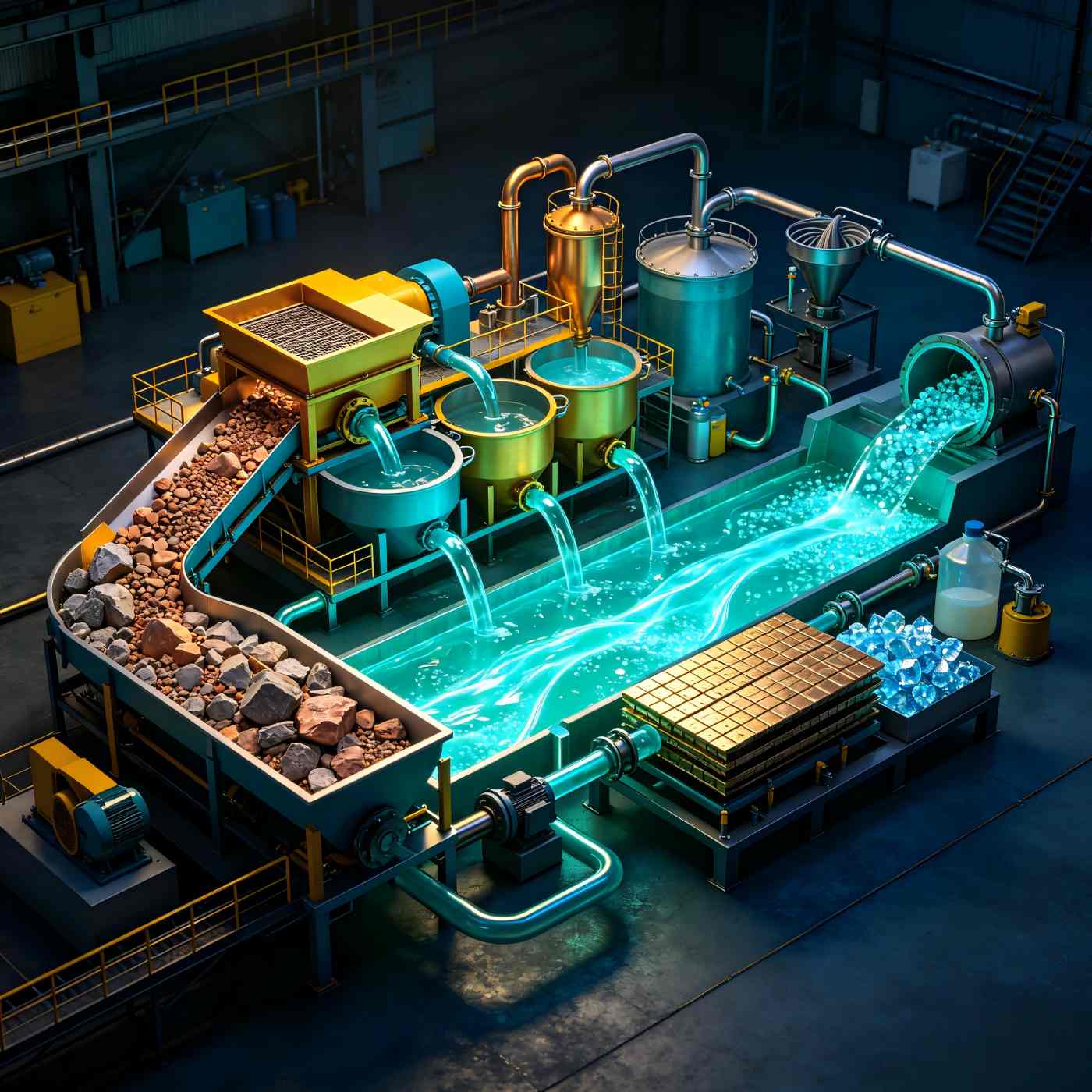
The Copper Ore Solution developed by FKN PANDA is designed to improve copper recovery efficiency in complex ore processing environments. It provides integrated flotation and chemical systems for sulfide, oxide, and polymetallic copper ores.
This solution is widely applied in modern copper mining operations where ore complexity and declining grades require more efficient and selective beneficiation systems.
Challenges in Copper Ore Processing
Copper ores often exist in complex mineral forms, including sulfide and oxide structures, which reduce flotation efficiency and increase separation difficulty.
Key processing challenges include:
Low recovery of fine copper particles
Difficult separation of copper from associated gangue minerals
Variable performance in oxide and sulfide ore systems
High reagent consumption in complex ore conditions
Integrated Copper Processing System
The Copper Ore Solution integrates multiple flotation and chemical systems to improve copper recovery across different ore types and processing conditions.
Core system integration includes:
Fine Particle Recovery System for fine copper minerals
Clay & Slime Control System for stable flotation conditions
Complex Polymetallic Separation System for mixed ore structures
Oxide & Refractory Ore System for difficult copper ores
Processing Mechanism
The system enhances copper recovery by improving mineral surface activation and optimizing reagent selectivity in flotation environments.
Main functional improvements:
Improved flotation kinetics for fine copper particles
Enhanced selective adsorption on copper-bearing minerals
Stabilized flotation performance in variable ore conditions
Applicable Copper Ore Types
This solution is suitable for a wide range of copper ore beneficiation systems.
Copper sulfide ore (e.g., chalcopyrite) flotation systems
Copper oxide ore processing systems
Complex polymetallic copper ores
Low-grade disseminated copper deposits
Industrial Application Scope
The Copper Ore Solution is designed for modern mining operations requiring stable and high-efficiency copper recovery under complex geological conditions.
It supports laboratory testing, pilot-scale optimization, and full industrial-scale beneficiation applications.
Copper Ore Solution – FAQ
Q1. Which types of copper ores is this solution suitable for, such as sulfide, oxide, and mixed ores?
The Copper Ore Solution is designed for a wide range of copper-bearing ore types, including sulfide ores (such as chalcopyrite and bornite), oxide ores (such as malachite and azurite), and mixed transitional ores. In sulfide systems, it supports selective flotation performance, while in oxide ores it can be integrated with sulfidization or leaching-assisted flotation routes. For mixed ores, the system helps stabilize recovery by balancing reagent interactions across different mineral phases. Mineralogical testing is typically required to define the optimal flowsheet and reagent regime for site-specific ore characteristics.
Q2. How does this solution improve recovery and economic performance in low-grade copper ores?
In low-grade copper ores, recovery efficiency is closely linked to liberation degree and reagent utilization efficiency. The Copper Ore Solution improves overall economics by enhancing particle surface activation and flotation response consistency under variable feed grades. It helps reduce losses in fine and ultra-fine fractions while maintaining stable concentrate production. In industrial operations, optimization of grinding fineness, pulp density, and residence time is essential to maximize recovery. Laboratory flotation tests and pilot-scale validation are commonly used to confirm economic feasibility before full-scale deployment.
Q3. What is the flotation response difference between chalcopyrite and chalcocite under this system?
Chalcopyrite and chalcocite exhibit different surface chemistry and oxidation behavior, which affects flotation kinetics. Chalcopyrite generally requires stronger collector interaction and controlled pulp potential, while chalcocite tends to float more readily under mild activation conditions. The Copper Ore Solution allows adjustment of reagent strategy to balance selectivity between these minerals. In practice, operators may modify collector type, aeration intensity, and pH control to optimize differential flotation. Laboratory kinetics testing is typically used to establish flotation rate curves for each mineral phase before industrial application.
Q4. Does oxide copper ore require sulfidization before flotation?
For oxide copper ores such as malachite and azurite, sulfidization is commonly required to convert the mineral surface into a sulfide-like state that can respond to conventional collectors. The Copper Ore Solution can be integrated with sodium sulfide or related sulfidizing agents depending on ore composition. Proper control of sulfidization dosage is critical, as under-dosing leads to poor recovery while over-dosing may reduce selectivity. In practice, staged reagent addition and pH stabilization are used to improve flotation response and ensure consistent metallurgical performance.
Q5. How does this solution perform in high-sulfur copper ores?
In high-sulfur copper ores, excessive sulfide minerals such as pyrite can increase reagent consumption and reduce selectivity. The Copper Ore Solution helps manage these interactions through controlled flotation conditions and selective depression strategies. By optimizing pulp potential and reagent balance, it reduces unwanted flotation of gangue sulfides. In industrial practice, the system is often combined with pH modifiers and selective depressants to improve concentrate quality. Mineralogical variability and sulfur content should be regularly monitored to maintain stable plant performance.
Q6. How is copper–molybdenum separation optimized using this system?
Copper–molybdenum separation typically requires selective depression of one mineral while maintaining flotation of the target phase. The Copper Ore Solution supports this process through reagent scheme optimization and controlled flotation environment adjustment. In many plants, lime regulation, sulfide suppression, and collector modification are used to achieve effective separation. The system allows flexible adjustment depending on whether copper or molybdenum is the primary recovery target. Bench-scale flotation tests are essential to determine optimal reagent sequencing and separation efficiency before industrial implementation.
Q7. How can concentrate grade be improved through reagent system optimization?
Improving copper concentrate grade requires balancing recovery and selectivity. The Copper Ore Solution enables optimization of collector dosage, frother selection, and gangue depression strategies to reduce impurity entrainment. In industrial practice, excessive reagent addition can lead to poor selectivity, while insufficient dosage reduces recovery. Therefore, staged addition and process monitoring are commonly applied. Adjustments to grinding fineness and pulp chemistry also play a critical role in improving concentrate quality. Continuous plant sampling and metallurgical balance tracking are recommended for stable grade control.
Q8. How does the system control sulfur influence in high-sulfur copper ores?
In high-sulfur copper ores, sulfur minerals such as pyrite can interfere with flotation selectivity and increase concentrate dilution. The Copper Ore Solution addresses this through controlled depression of iron sulfides and stabilization of pulp electrochemistry. pH adjustment and selective reagent systems are commonly applied to reduce pyrite flotation tendency. In practice, oxidation potential control and reagent timing are key factors in minimizing sulfur contamination. Regular monitoring of sulfur distribution between concentrate and tailings is essential for maintaining consistent metallurgical performance.
Q9. How is flotation performance affected in seawater or high-hardness water conditions?
Seawater and high-hardness water introduce high ionic strength and multivalent ions that can affect reagent adsorption and froth stability. The Copper Ore Solution is designed to maintain stable flotation performance under such conditions by improving reagent compatibility and minimizing ion interference. In practice, adjustments in collector type and frother dosage are often required. Calcium and magnesium ions may influence pulp chemistry, requiring pH and reagent optimization. Site-specific testing is recommended to establish stable operating conditions under local water chemistry.
Q10. What are the main operational challenges in industrial copper ore processing using this solution?
Common operational challenges include feed grade variability, mineralogical complexity, fine particle losses, and inconsistent reagent response. The Copper Ore Solution addresses these issues through flexible reagent adjustment and process stabilization strategies. However, fluctuations in grinding fineness, water chemistry, and ore hardness can still affect performance. In industrial plants, maintaining stable pulp density, air flow rate, and reagent dosing is critical. Regular metallurgical auditing and on-site optimization are recommended to ensure consistent recovery and concentrate quality under varying mining conditions.