


Turning Waste into Wealth: PANDA Leaching Agent Recovers 70.81% Gold from Refractory Flotation Tails
Executive Summary
The mining industry is facing a dual challenge: dwindling high-grade ore and mounting pressure to manage legacy tailings. For complex flotation tailings containing finely disseminated gold, traditional cyanidation often falls short due to environmental risks and interference from impurities.
This case study presents a groundbreaking solution for a gold mine in Guizhou, China. By utilizing the PANDA Environmentally Friendly Gold Leaching Agent, the operation successfully recovered 70.81% of the residual gold from highly refractory flotation tailings. Crucially, this performance matches the recovery rate of sodium cyanide (71.46%) while offering a non-toxic alternative.
The Challenge: Complex Mineralogy and "Locked" Gold
The subject material—flotation tailings—presents a unique set of challenges. With a grade of 1.53 g/t Au, the economic viability hinges on efficient extraction. However, analysis revealed that 70.59% of the gold is encapsulated within pyrite, arsenopyrite, and gangue minerals. This "locked" gold is notoriously difficult to extract using conventional methods.
Furthermore, the presence of antimony, arsenic, and iron creates a chemically complex environment that can poison traditional leaching circuits.
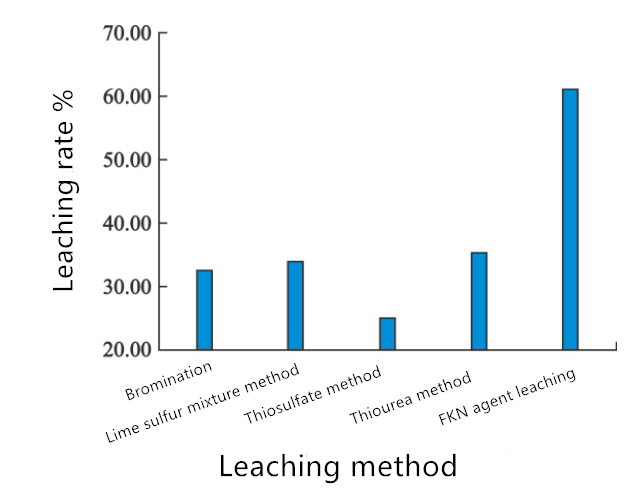
Figure 1: Comparative analysis of different leaching methods. PANDA demonstrated a significantly higher leaching rate (60.91%) compared to bromination, thiourea, and thiosulfate methods.
Why PANDA Outperforms Other Alternatives
Before settling on PANDA, the laboratory rigorously tested five different methodologies:
Bromination Method
Lime Sulfur Mixture Method
Thiosulfate Method
Thiourea Method
PANDA Environmentally Friendly Leaching Agent
As shown in Figure 1, the PANDA agent delivered a leaching rate of 60.91% during the screening phase, far surpassing the other non-cyanide options. This immediate superiority in handling complex matrices made it the clear choice for optimization.
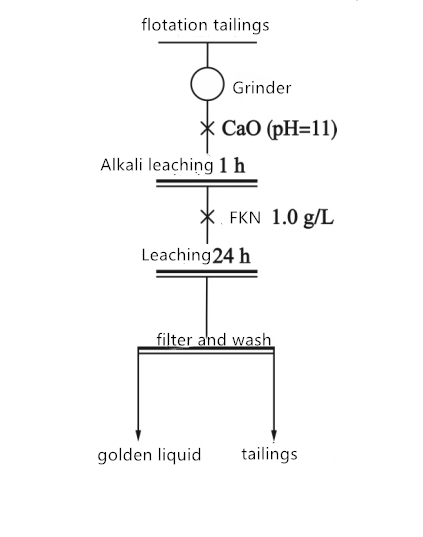
Figure 2: Optimizing particle size is critical for exposing encapsulated gold particles.
Optimizing the Leach: Key Process Parameters
To achieve the target recovery, the team optimized the following parameters for the PANDA process:
Grinding Fineness: -0.074mm (90% passing). This extreme fineness is necessary to break open the host minerals and expose the fine gold particles.
Liquid-to-Solid Ratio: 2:1. This ratio balances reagent efficiency with throughput capacity.
Reagent Concentration: 1.5 g/L. This concentration proved optimal for maintaining a stable reaction environment without excessive chemical consumption.
Temperature: 25°C (Ambient). The process operates efficiently at room temperature, reducing energy costs.
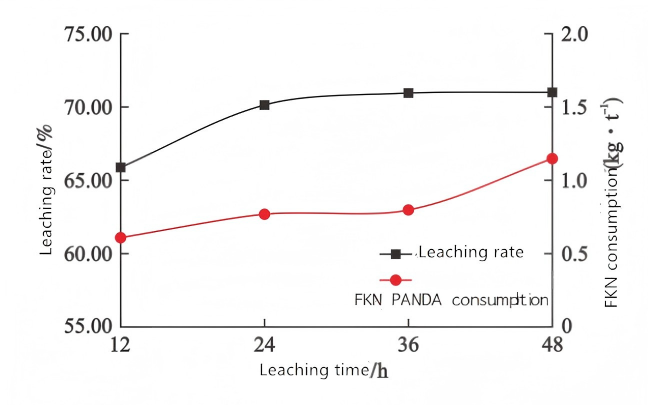
Leaching Time: 24 hours. This duration ensures complete reaction kinetics.
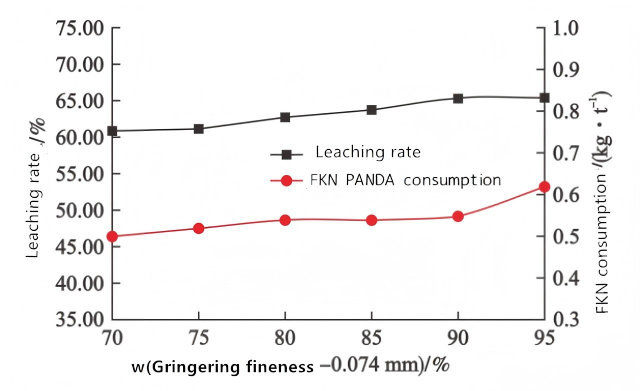
Figure 3: The impact of grinding fineness on recovery. Recovery plateaus after 90% passing -0.074mm.
The Verdict: PANDA vs. Sodium Cyanide
The ultimate test was a head-to-head comparison under comprehensive optimal conditions. The results, detailed in the table below, are compelling for any mining engineer evaluating a switch to non-cyanide processing.
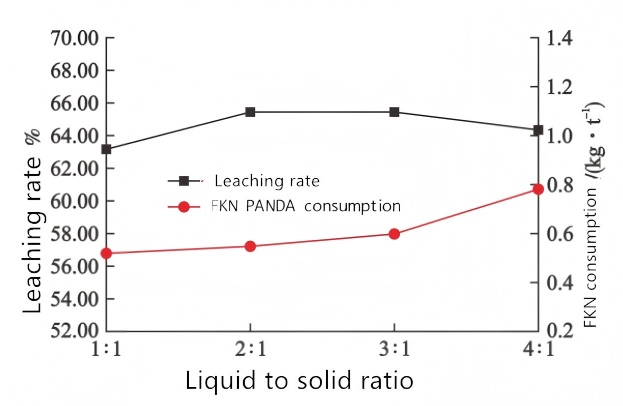
Figure 4: Optimizing the liquid-to-solid ratio to balance recovery and reagent cost.
| Performance Metric | PANDA Leaching Agent | Sodium Cyanide (NaCN) |
|---|---|---|
| Avg. Gold Leaching Rate | 70.81% | 71.64% |
| Unit Consumption | 0.53 kg/t | 0.54 kg/t |
| Cost (Approx.) | ~9.9 CNY/t | ~8.2 CNY/t |
| Toxicity Profile | Non-Toxic / Eco-Friendly | Highly Toxic |
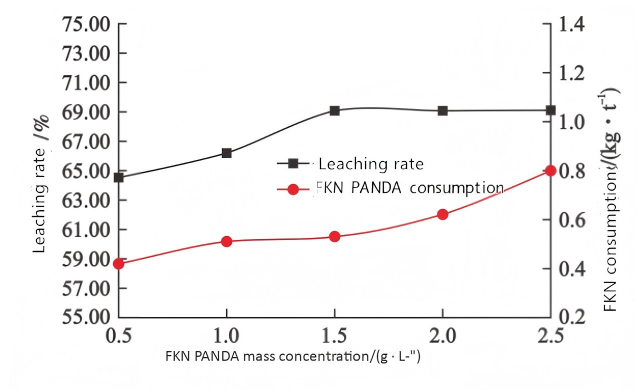
Figure 5: PANDA concentration test results. Efficiency stabilizes at 1.5 g/L.
Conclusion: A Viable Path for Tailings Reprocessing
For mines burdened by "waste" that still holds value, the PANDA leaching agent offers a sustainable solution. It successfully navigates the complexities of antimony-gold-arsenic ores found in flotation tails.
While the chemical cost per ton is slightly higher than cyanide (~9.9 vs ~8.2 CNY), the environmental benefits, safety improvements, and potential for "Green Mine" certification often outweigh this marginal difference. The PANDA agent is not just a reagent; it is a key to unlocking the value in your tailings dam.
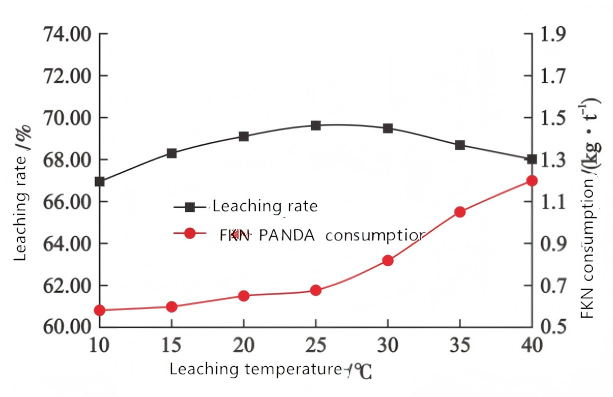
Figure 6: Temperature sensitivity test. Optimal performance is achieved at 25°C.
Related Catalogues:
Related Products:
Related Solutions:
GOLD RECOVERY OPTIMIZATION SYSTEM
FAQ for PANDA Leaching Agent Recovers 70.81% Gold from Refractory Flotation Tails
1. Can the PANDA leaching agent effectively recover gold from refractory flotation tailings?
Yes. The PANDA agent is specifically effective for complex flotation tailings. In tests conducted on Guizhou ore, 70.59% of the gold was encapsulated within pyrite and arsenopyrite. The PANDA agent successfully recovered 70.81% of this locked gold, proving its ability to handle refractory materials where other non-cyanide methods (like thiourea or thiosulfate) failed to deliver competitive rates.
2. How does the gold recovery rate of PANDA compare to cyanide in tailings reprocessing?
The recovery rate is nearly identical. In direct comparative tests under optimized conditions:
PANDA Leaching Rate: 70.81%
Sodium Cyanide Leaching Rate: 71.46%
This data indicates that switching to the PANDA eco-friendly agent does not result in a significant loss of metal recovery, making it a technically viable substitute for cyanide in tailings processing.
3. What is the required grinding fineness when using PANDA on flotation tailings?
Due to the fine dissemination of gold particles in the host minerals, a high degree of liberation is required. The optimal grinding fineness for the PANDA process was determined to be -0.074mm (90% passing). This ensures that the encapsulated gold is sufficiently exposed to the leaching solution to achieve maximum recovery.
4. What is the chemical consumption rate of PANDA compared to sodium cyanide?
The consumption rates are equivalent. The average unit consumption for the PANDA agent was 0.53 kg/t, while sodium cyanide consumed 0.54 kg/t. This parity in dosage means that operational costs related to reagent volume remain consistent, providing a straightforward cost-benefit analysis for plant managers.
5. What are the optimal pH and temperature conditions for the PANDA leaching process?
The PANDA process operates efficiently under mild conditions:
pH: Adjusted to 11.0 using lime (CaO), similar to cyanidation circuits.
Temperature: 25°C (ambient temperature).
Time: 24 hours.
Unlike some alternative processes that require high heat or extreme pH levels, PANDA integrates easily into existing plant infrastructure without major modifications.