


Lead Nitrate: A Selective Activator in Oxide and Sulfide Mineral Flotation
Application Scope
Lead nitrate (Pb(NO₃)₂) is an effective mineral flotation activator applied in both sulfide and oxide mineral processing systems. Its activation function improves mineral surface reactivity, enhances collector attachment, and supports selective separation in complex flotation circuits.
The most significant application of lead nitrate is gold-bearing sulfide ore flotation, where it activates pyrite and arsenopyrite, which are important gold-hosting sulfide minerals. In complex refractory gold ore processing, lead nitrate combined with copper sulfate activators and collectors such as butyl xanthate and ammonium butyl dithiophosphate has achieved gold concentrate grades of 21.05 g/t with recovery reaching 92.58%.
The activation effect improves the hydrophobic response of gold-associated sulfide minerals, supporting more effective separation from gangue minerals.
Primary Applications
-
Gold-Bearing Sulfide Ore Flotation: Lead nitrate activates pyrite and arsenopyrite surfaces, improving collector adsorption and supporting enhanced recovery of gold associated with sulfide minerals.
-
Antimony Ore Beneficiation: Lead nitrate activates stibnite (Sb₂S₃) surfaces, promoting collector attachment and improving antimony flotation selectivity. In optimized flotation conditions, lead nitrate application has achieved antimony recovery of 77.33% and gold recovery of 59.16%.
-
Tin and Tungsten Oxide Flotation: In benzohydroxamic acid (BHA) flotation systems, lead nitrate acts as an activator for oxide minerals including cassiterite and scheelite. The reagent improves collecting performance through lead-organic complex formation and expands the effective flotation pH range for scheelite recovery.
Secondary Applications
Lead nitrate is also applied in oxidized lead-zinc mineral activation and as an accelerator in gold cyanidation circuits, where it can improve gold leaching kinetics without increasing cyanide consumption.
Mechanism
In sulfide mineral flotation systems, Pb²⁺ ions adsorb onto mineral surfaces and form lead sulfide or lead-xanthate complexes. These surface reactions increase mineral hydrophobicity and promote collector attachment.
For oxide mineral flotation using benzohydroxamic acid (BHA), lead nitrate participates in the formation of HO-Pb-BHA complexes on mineral surfaces. This metal-organic interaction improves collector selectivity and strengthens adsorption behavior on minerals such as cassiterite.
Research indicates that the HO-Pb-BHA complex provides stronger surface interaction compared with sequential adsorption of lead hydroxide species and BHA anions, explaining the improved flotation performance of pre-mixed reagent systems.
Physicochemical Properties
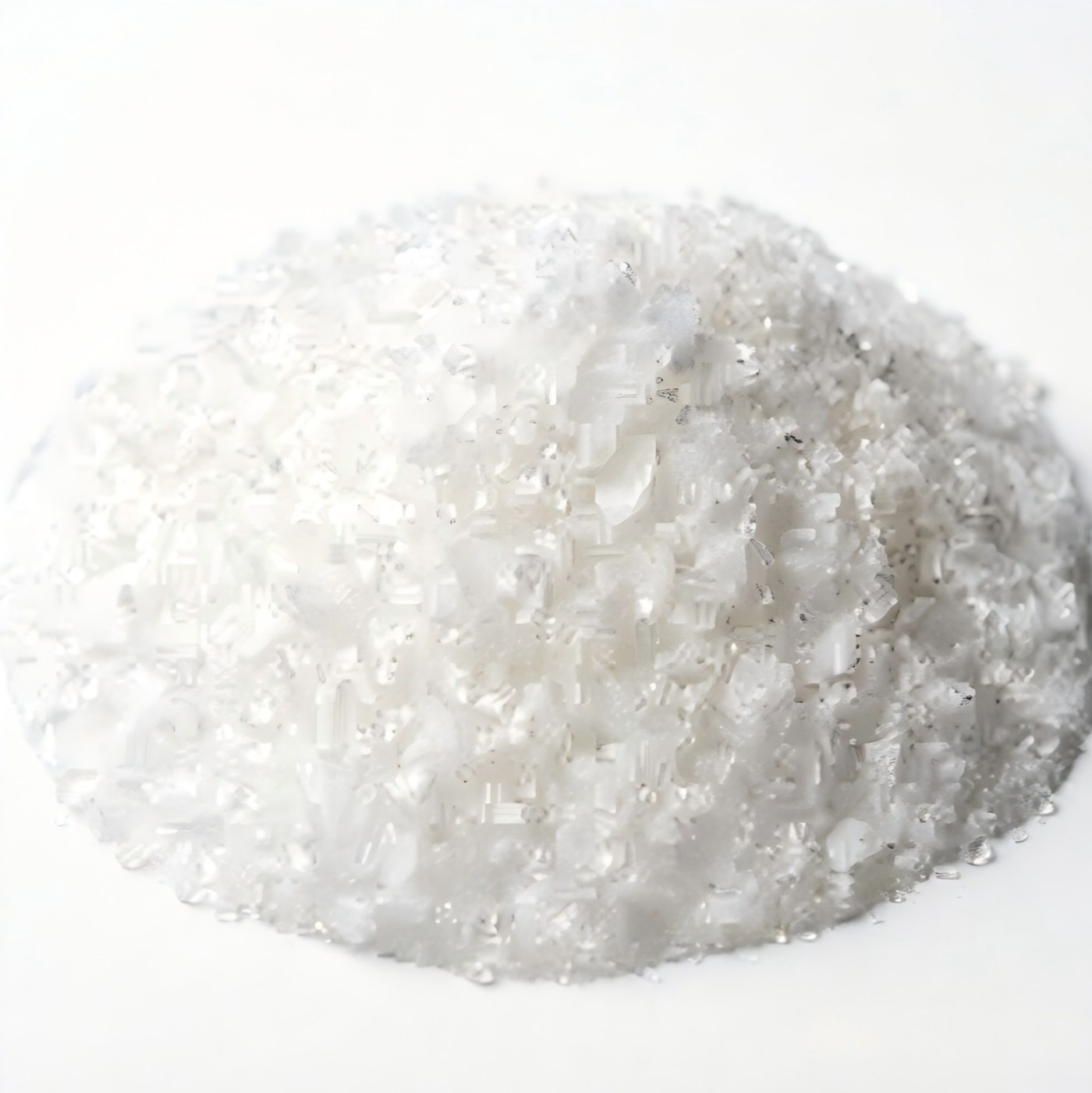
Lead nitrate is supplied as a high-purity inorganic salt with strong water solubility. Its consistent chemical composition supports controlled preparation of flotation reagent systems for sulfide and oxide mineral processing applications.
| Parameter | Specification |
|---|---|
| CAS Number | 10099-74-8 |
| Molecular Formula | Pb(NO₃)₂ |
| Molecular Weight | 331.2 g/mol |
| Appearance | White crystalline powder |
| Assay | ≥99.0% |
| pH (5% solution) | 8.5–9.0 |
| Solubility | Highly soluble in water |
Specifications
High-purity lead nitrate is suitable for flotation reagent preparation where controlled activation of sulfide and oxide minerals is required. Its stable quality supports laboratory evaluation, pilot testing, and industrial mineral processing applications.
-
Available with ≥99.0% assay purity
-
Suitable for gold, antimony, tin, and tungsten flotation systems
-
Compatible with xanthate and hydroxamate-based collector systems
-
Applicable for sulfide mineral activation and oxide mineral flotation enhancement
Storage & Handling
Store lead nitrate in tightly sealed containers in a cool, dry, and well-ventilated area. Protect from moisture, fire sources, and direct sunlight.
Keep lead nitrate separated from organic materials and reducing agents. Due to its toxicity and potential health hazards, strict chemical handling procedures must be implemented during storage, transportation, and application.
Personnel handling lead nitrate should wear appropriate PPE including chemical-resistant gloves, safety goggles, protective clothing, and respiratory protection. Avoid dust generation during handling and dispose of waste according to applicable hazardous material regulations.
Advantages / Limitations
Advantages
-
Highly effective activator for stibnite flotation in antimony mineral processing circuits.
-
Expands the effective flotation pH range for scheelite recovery, improving operational flexibility.
-
Can enhance gold leaching kinetics in cyanidation systems without increasing cyanide consumption.
-
Provides synergistic performance with BHA collectors for improved oxide mineral flotation selectivity.
Limitations
-
High toxicity requires strict safety management and controlled handling procedures.
-
Lead content introduced into concentrates may require additional downstream treatment considerations.
-
Environmental regulations may restrict lead-based reagent application in certain regions.
-
Requires precise dosage control to prevent excessive mineral activation and reduced selectivity.
Summary
Lead nitrate (CAS 10099-74-8) is a selective flotation activator widely applied in gold-bearing sulfide ore processing, antimony beneficiation, and tin-tungsten oxide mineral flotation systems. Its ability to enhance mineral surface reactivity and improve collector adsorption makes it valuable for complex mineral separation circuits.
With applications including pyrite and arsenopyrite activation in refractory gold ores, stibnite flotation improvement, and cassiterite/scheelite activation through lead-organic complex formation, lead nitrate remains an important mineral processing reagent. Due to its toxicity, safe handling, dosage optimization, and environmental compliance controls are essential for industrial use.
Lead Nitrate – FAQ
Q1. How does Lead Nitrate function as an activator in gold flotation and sulfide mineral recovery?
Lead Nitrate is commonly used as an activator in flotation systems, especially for gold-bearing sulfide ores, where it can improve the surface activity of certain minerals and enhance collector adsorption. Lead ions may interact with mineral surfaces, promoting more favorable flotation conditions for minerals such as pyrite, arsenopyrite, and other sulfide-associated gold carriers. The actual effect depends on ore mineralogy, oxidation degree, pulp chemistry, and collector type. Laboratory flotation testing is recommended to optimize Lead Nitrate dosage and evaluate improvements in recovery and selectivity.
Q2. How should Lead Nitrate dosage be optimized in gold flotation operations?
The optimal dosage of Lead Nitrate in gold flotation depends on gold occurrence, sulfide mineral content, oxidation level, and the overall reagent system. An appropriate dosage can improve mineral surface activation and enhance collector response, while excessive addition may increase reagent consumption or negatively affect selectivity. Optimization is typically performed through laboratory and pilot flotation tests by evaluating gold recovery, concentrate grade, mineral separation efficiency, pulp conditions, and interaction with collectors and frothers before industrial application.
Q3. What is the activation mechanism of Lead Nitrate in arsenic-bearing gold ore flotation?
In arsenic-bearing gold ores, Lead Nitrate may be used to modify mineral surface properties and improve the flotation response of gold-associated sulfide minerals such as arsenopyrite under suitable conditions. Lead ions can participate in surface reactions that influence collector adsorption and mineral hydrophobicity. However, the effect depends strongly on arsenic mineral composition, oxidation state, liberation size, and pulp chemistry. Metallurgical testing with representative ore samples is necessary to determine suitable dosage and maintain a balance between gold recovery and concentrate quality.
Q4. How does Lead Nitrate influence the flotation performance of copper-molybdenum and sulfide mineral systems?
Lead Nitrate may be applied in certain copper-molybdenum flotation circuits to improve the surface activity of sulfide minerals and enhance collector interaction. Its effect is related to mineral surface chemistry, oxidation conditions, pulp potential, and reagent compatibility. Proper application requires careful control of dosage and addition sequence because excessive lead ion concentration may influence flotation selectivity. Laboratory testing should evaluate copper and molybdenum recovery, concentrate grade, mineral separation efficiency, and reagent interactions before process implementation.
Q5. What factors affect Lead Nitrate activation performance under different water chemistry conditions?
The activation performance of Lead Nitrate can be affected by process water composition, dissolved ions, pH, pulp potential, and interactions with other flotation reagents. High levels of calcium, magnesium, or dissolved salts may influence mineral surface reactions and reagent behavior. To ensure stable performance, evaluation should be carried out using actual process water or simulated plant conditions. Key indicators include recovery improvement, concentrate quality, reagent consumption, and flotation selectivity. Site-specific testing is recommended before industrial application.
Q6. How does Lead Nitrate concentration affect flotation pulp chemistry and mineral activation?
Lead Nitrate concentration can influence flotation pulp chemistry by controlling the availability of lead ions for mineral surface interaction. Changes in concentration may affect collector adsorption, mineral activation behavior, and separation selectivity. During process optimization, parameters such as pulp pH, oxidation-reduction potential (ORP), mineral liberation, and flotation response are commonly monitored together. The required Lead Nitrate concentration varies according to ore type, mineral composition, and flotation objectives, making laboratory verification an important step before scale-up.
Q7. Can Lead Nitrate be used for oxide and partially oxidized mineral flotation applications?
Lead Nitrate can be evaluated in flotation systems containing partially oxidized minerals where surface activation is required to improve collector response. Its effectiveness depends on the degree of oxidation, mineral structure, associated sulfide content, and the selected collector system. In some cases, lead ions may help modify mineral surfaces and improve flotation behavior, but results are ore-specific. Laboratory flotation studies are recommended to determine whether Lead Nitrate provides practical benefits for a particular oxide or mixed mineral deposit.
Q8. What is the difference between Lead Nitrate and Lead Acetate in flotation activation applications?
Lead Nitrate and Lead Acetate are both lead-based activators that can provide lead ions for mineral surface modification, but they differ in anion composition, solution chemistry, and potential process interactions. The selection between these reagents depends on ore characteristics, water chemistry, flotation conditions, and operational requirements. Comparative testing is recommended to evaluate activation efficiency, mineral recovery, concentrate quality, and reagent compatibility. The most suitable lead reagent should be selected based on metallurgical performance rather than chemical composition alone.
Q9. How is Lead Nitrate applied in critical mineral flotation processes such as tungsten, tin, and antimony recovery?
Lead Nitrate may be considered in certain flotation systems involving tungsten, tin, antimony, and other minerals where surface activation can improve collector interaction. Its role depends on mineral surface chemistry, oxidation conditions, and the presence of associated sulfide or oxide minerals. Successful application requires optimization of reagent dosage, pulp conditions, and flotation sequence. Because different deposits have unique mineralogical characteristics, laboratory and pilot-scale testing are necessary to confirm suitability and establish reliable operating parameters.
Q10. What are the key considerations when using Lead Nitrate as a mineral flotation activator?
When using Lead Nitrate as a flotation activator, important considerations include ore mineralogy, dosage control, reagent compatibility, environmental management, and process safety requirements. Lead Nitrate should be applied according to controlled metallurgical conditions, with attention to pulp chemistry, recovery targets, and concentrate specifications. Proper laboratory evaluation helps determine whether the reagent improves mineral activation and flotation selectivity for a specific ore. Industrial operations should follow appropriate handling procedures and regulatory requirements for lead-containing chemicals.