


Sodium m-Nitrobenzenesulfonate: A Performance Enhancer in Gold Leaching and Mineral Processing
Application Scope
Sodium m-nitrobenzenesulfonate (MS) is primarily applied as a process intensifier in gold extraction circuits rather than as a conventional flotation reagent. Its main application is in gold ore cyanidation leaching, where it improves gold dissolution kinetics by modifying the cathodic reaction process.
Research indicates that MS can accelerate gold leaching rates without degrading cyanide stability in the leach solution, making it suitable for low-grade gold ores where slow dissolution kinetics limit recovery efficiency. In industrial simulation tests using pyrite cinder containing gold as low as 0.94 g/t, MS-containing leaching systems achieved satisfactory gold recovery performance, demonstrating potential application in heap leaching and vat leaching operations.
A second application is in the formulation of gold extraction systems for refractory gold ores, especially high-sulfur and high-arsenic gold materials. In patented lixiviant formulations, sodium m-nitrobenzenesulfonate works together with other reagents to promote oxidative decomposition of sulfur and arsenic species, reducing their interference with gold dissolution.
Beyond gold extraction, related nitrobenzenesulfonate compounds have demonstrated potential in selective depression of arsenic-bearing minerals. Similar organic inhibitors have shown effectiveness in depressing arsenopyrite flotation under alkaline conditions, supporting separation strategies in polymetallic sulfide processing.
Mechanism
Sodium m-nitrobenzenesulfonate enhances cyanidation performance by modifying the cathodic reaction pathway during gold dissolution. Its oxidizing characteristics promote electron transfer at the gold surface, accelerating the overall leaching kinetics without chemically consuming cyanide species.
The gold dissolution process follows diffusion-controlled behavior and can be described by the shrinking core model. In refractory gold treatment, MS also contributes to oxidative decomposition of sulfur and arsenic-bearing phases, reducing passivation effects that hinder gold exposure and dissolution.
Physicochemical Properties
| Parameter | Specification |
|---|---|
| CAS Number | 127-68-4 |
| Molecular Formula | C₆H₄NO₅S·Na |
| Molecular Weight | 225.16 g/mol |
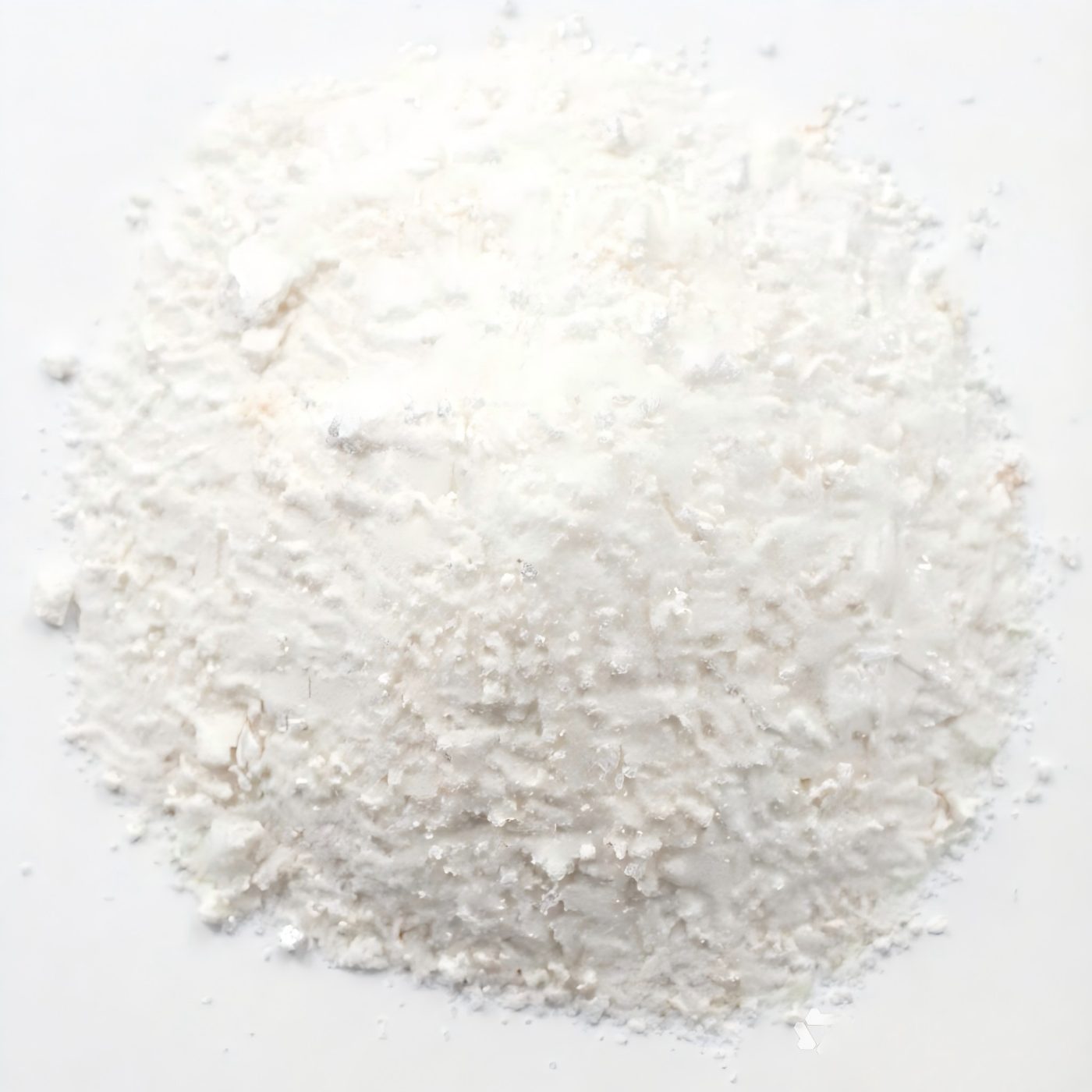
| Appearance | Beige to brown-yellow powder |
| Assay | ≥96.0% |
| pH (1% solution) | 7–9 |
| Iron Content | ≤10 ppm |
Specifications
Sodium m-nitrobenzenesulfonate is supplied as a high-purity industrial additive suitable for integration into gold leaching circuits and reagent formulations. Its controlled purity and stable physicochemical characteristics support consistent performance in laboratory evaluation and plant-scale process optimization.
Storage & Handling
Store sodium m-nitrobenzenesulfonate in tightly sealed containers in a cool, dry, and well-ventilated warehouse. Protect the product from moisture and incompatible oxidizing materials.
Under normal storage conditions, MS remains stable. Operators should use appropriate personal protective equipment including chemical-resistant gloves, safety goggles, and dust protection during handling. Spilled material should be collected and disposed of according to applicable hazardous waste regulations.
Advantages / Limitations
Advantages
Enhances gold cyanidation leaching kinetics, especially for low-grade gold ores.
Maintains cyanide stability during the leaching process.
Compatible with conventional and alternative gold lixiviant systems.
Demonstrated application value in refractory high-sulfur and high-arsenic gold ores.
Effective at relatively low addition rates for process improvement.
Limitations
Functions primarily as a leaching intensifier rather than a standalone gold extraction reagent.
Application performance depends on ore mineralogy and leaching conditions.
Its primary commercial application remains focused on gold processing circuits.
Summary
Sodium m-nitrobenzenesulfonate (CAS 127-68-4) is a specialized gold leaching additive designed to improve cyanidation kinetics through cathodic reaction modification. It provides value in low-grade and refractory gold ore processing by enhancing dissolution efficiency while maintaining cyanide stability.
With demonstrated application in sulfur- and arsenic-bearing gold ores and compatibility with existing leaching systems, MS offers a practical option for improving challenging gold extraction operations where conventional kinetics are insufficient.
Sodium m-Nitrobenzenesulfonate – FAQ
Q1. How does Sodium m-Nitrobenzenesulfonate function as an activator in mineral flotation applications?
Sodium m-Nitrobenzenesulfonate is used as a functional flotation reagent in certain mineral processing systems where surface modification and pulp chemistry control are required. Its role is mainly associated with adjusting mineral surface properties and improving the interaction between minerals and flotation reagents under suitable conditions. The actual activation effect depends on ore mineralogy, oxidation degree, particle size, pH, and reagent compatibility. Laboratory flotation testing is recommended to evaluate its influence on mineral recovery, selectivity, and overall flotation performance before industrial application.
Q2. How should Sodium m-Nitrobenzenesulfonate dosage be optimized in oxide mineral flotation systems?
The appropriate dosage of Sodium m-Nitrobenzenesulfonate depends on mineral composition, oxidation characteristics, pulp conditions, and the target separation performance. Excessive dosage may increase reagent consumption or affect flotation selectivity, while insufficient dosage may not provide the desired surface modification effect. Optimization is typically carried out through bench-scale flotation tests by evaluating recovery, concentrate grade, pulp chemistry, and interaction with collectors or other modifiers. Industrial dosage should be adjusted according to ore variability and process requirements.
Q3. What factors affect the performance of Sodium m-Nitrobenzenesulfonate in gold flotation applications?
In gold flotation systems, the performance of Sodium m-Nitrobenzenesulfonate depends on gold occurrence, associated minerals, oxidation conditions, and the overall reagent scheme. When applied as a flotation modifier, it may influence mineral surface behavior and improve the selectivity of certain separation systems under appropriate conditions. Key evaluation parameters include gold recovery, concentrate quality, mineral liberation, pulp potential, and compatibility with collectors and frothers. Because gold ores have complex and variable mineralogy, laboratory verification is essential before commercial application.
Q4. How does Sodium m-Nitrobenzenesulfonate interact with other flotation reagents such as Copper Sulfate?
The interaction between Sodium m-Nitrobenzenesulfonate and other flotation reagents, such as Copper Sulfate, depends on mineral type, reagent sequence, pulp chemistry, and process objectives. Combined reagent systems may influence mineral surface reactions, collector adsorption, and flotation selectivity. However, the effect is highly ore-specific and cannot be determined only from individual reagent properties. Laboratory flotation testing should be conducted to evaluate recovery improvement, concentrate grade, reagent consumption, and compatibility before introducing combined reagent schemes into industrial flotation circuits.
Q5. How does Sodium m-Nitrobenzenesulfonate concentration affect flotation pulp chemistry?
Sodium m-Nitrobenzenesulfonate concentration can influence flotation pulp chemistry by affecting reagent interactions, mineral surface conditions, and separation behavior. Changes in concentration may alter the adsorption environment between minerals and flotation reagents, which can impact recovery and selectivity. During process optimization, parameters such as pH, oxidation-reduction potential (ORP), conditioning time, and flotation response should be evaluated together. The suitable concentration range depends on ore characteristics, water chemistry, and the complete flotation reagent system.
Q6. Can Sodium m-Nitrobenzenesulfonate be applied in lithium and other critical mineral flotation processes?
Sodium m-Nitrobenzenesulfonate may be evaluated in certain lithium and critical mineral flotation applications where selective surface modification is required. Its effectiveness depends on the mineral type, such as spodumene or lepidolite, associated gangue minerals, surface oxidation conditions, and the selected collector system. Application should be based on mineralogical analysis and laboratory flotation verification rather than general assumptions. Testing should focus on recovery improvement, concentrate quality, reagent compatibility, and process stability under representative operating conditions.
Q7. How should Sodium m-Nitrobenzenesulfonate performance be evaluated under high-calcium or high-salinity water conditions?
The performance stability of Sodium m-Nitrobenzenesulfonate under high-calcium or high-salinity water conditions should be evaluated using actual process water or simulated plant water. Dissolved ions may influence reagent behavior, mineral surface interactions, and flotation selectivity. Important evaluation factors include mineral recovery, concentrate grade, reagent consumption, pulp stability, and consistency of flotation results. Site-specific laboratory testing is recommended because differences in water chemistry can significantly affect reagent performance in industrial mineral processing operations.
Q8. What is the role of Sodium m-Nitrobenzenesulfonate in complex oxide mineral flotation systems?
In complex oxide mineral flotation systems, Sodium m-Nitrobenzenesulfonate may serve as a chemical modifier to improve control over mineral surface characteristics and reagent interactions. Its application can be considered in systems involving oxidized minerals where conventional flotation conditions may provide limited selectivity. The practical effect depends on mineral composition, surface oxidation state, particle size distribution, and the complete reagent scheme. Metallurgical testing is required to determine whether it can improve flotation efficiency for specific oxide mineral deposits.
Q9. What are the differences between Sodium m-Nitrobenzenesulfonate and related nitrobenzenesulfonate reagents in flotation applications?
Sodium m-Nitrobenzenesulfonate and related nitrobenzenesulfonate reagents may differ in molecular structure, surface interaction behavior, solution characteristics, and application performance. These differences can influence mineral selectivity, reagent compatibility, and flotation response depending on the ore system. Selection should be based on metallurgical testing rather than chemical similarity alone. Comparative evaluation should consider mineral recovery, concentrate quality, reagent consumption, pulp conditions, and operational requirements to identify the most suitable reagent for a specific flotation process.
Q10. What are the key considerations when using Sodium m-Nitrobenzenesulfonate as a flotation activator?
When applying Sodium m-Nitrobenzenesulfonate in mineral processing, key considerations include ore mineralogy, reagent dosage, pulp pH, water chemistry, particle size, and interaction with other flotation chemicals. Effective use requires controlled laboratory evaluation followed by process optimization under conditions representative of industrial operation. Monitoring recovery, concentrate grade, selectivity, and reagent stability helps determine practical suitability. A properly designed reagent program can support more stable flotation performance while reducing uncertainty during process development and scale-up.