


Sodium Dodecyl Sulfonate (SDS) – Technical Data Sheet
Application Scope
Sodium dodecyl sulfonate (SDS) is an anionic surfactant widely applied as a collector or auxiliary collector in oxidized mineral flotation. Its sulfonate functional group provides strong hydrophilic–hydrophobic balance, while its synergistic interaction with other collectors makes it valuable for complex beneficiation circuits requiring improved mineral surface modification and reagent compatibility.
SDS applications mainly focus on antimony, fluorite, lithium, magnesite, tungsten and manganese mineral processing systems, where it functions as either a selective collector or a performance-enhancing component in mixed reagent schemes.
Antimony Ores – Antimonite Flotation (Primary Application)
Antimonite flotation represents the most targeted application of SDS among critical mineral systems. SDS demonstrates selective collecting ability for antimonite by improving mineral surface hydrophobicity while maintaining quartz hydrophilicity.
Micro-flotation studies show that SDS achieves optimal antimonite recovery of 90.25% at pH 8 with a dosage of 70 mg/L, while quartz recovery remains below 10%. Surface analysis results confirm selective adsorption of SDS on antimonite through Sb–O–S bond formation, with limited interaction on quartz surfaces.
This selective adsorption behavior makes SDS suitable for fine antimonite recovery where quartz separation and flotation selectivity are key process challenges.
Fluorite – Tungsten-Molybdenum-Bismuth Complex Ores
SDS plays an auxiliary role in fluorite recovery from complex polymetallic ores. In tungsten-molybdenum-bismuth associated fluorite circuits, SDS is commonly used together with collectors such as sodium oleate and benzohydroxamic acid.
The mixed collector system improves fluorite flotation performance after previous recovery stages of molybdenum, bismuth and tungsten. It helps reduce interference from residual flotation reagents and improves fluorite concentrate grade and recovery.
Lithium Ores – Spodumene Beneficiation
In spodumene flotation, SDS is mainly used as an auxiliary surfactant within mixed collector systems rather than as a standalone collector.
Single-mineral flotation tests indicate moderate spodumene recovery when SDS is used independently. However, when combined with fatty acid collectors or amine-based reagents, SDS can improve collector dispersion and contribute to enhanced flotation performance in lithium beneficiation circuits.
Magnesite – Synergistic Flotation with Sodium Oleate
SDS acts as a synergist in magnesite flotation when combined with sodium oleate. The combined collector system improves collecting ability and ion resistance, supporting separation of magnesite from dolomite.
Studies using zeta potential, contact angle and FTIR analysis confirm co-adsorption of SDS and sodium oleate on magnesite surfaces. SDS also improves sodium oleate dispersion and solubility in aqueous systems, creating a synergistic flotation effect.
Other Applications
SDS is also applied in tungsten (scheelite) flotation as part of mixed collector systems and in manganese ore beneficiation for separation of reduced pyrolusite from diaspore.
In these applications, SDS primarily functions as an auxiliary collector or synergistic reagent rather than a standalone flotation collector.
Mechanism
Sodium dodecyl sulfonate interacts with mineral surfaces through physical adsorption and chemical interactions. On antimonite surfaces, selective chemisorption occurs through Sb–O–S bond formation, enabling effective separation from quartz.
In mixed collector systems, SDS can co-adsorb with other surfactants through electrostatic interactions. The negatively charged sulfonate groups interact with positively charged collector species, improving hydrophobic chain packing and increasing collector density on target mineral surfaces.
Flotation performance is strongly influenced by pH conditions, with effective performance generally observed in neutral to mildly alkaline environments.
Physicochemical Properties
| Property | Value |
|---|---|
| Chemical Name | Sodium Dodecane-1-sulfonate |
| CAS Number | 2386-53-0 |
| Molecular Formula | C₁₂H₂₅NaO₃S |
| Molecular Weight | 272.38 g/mol |
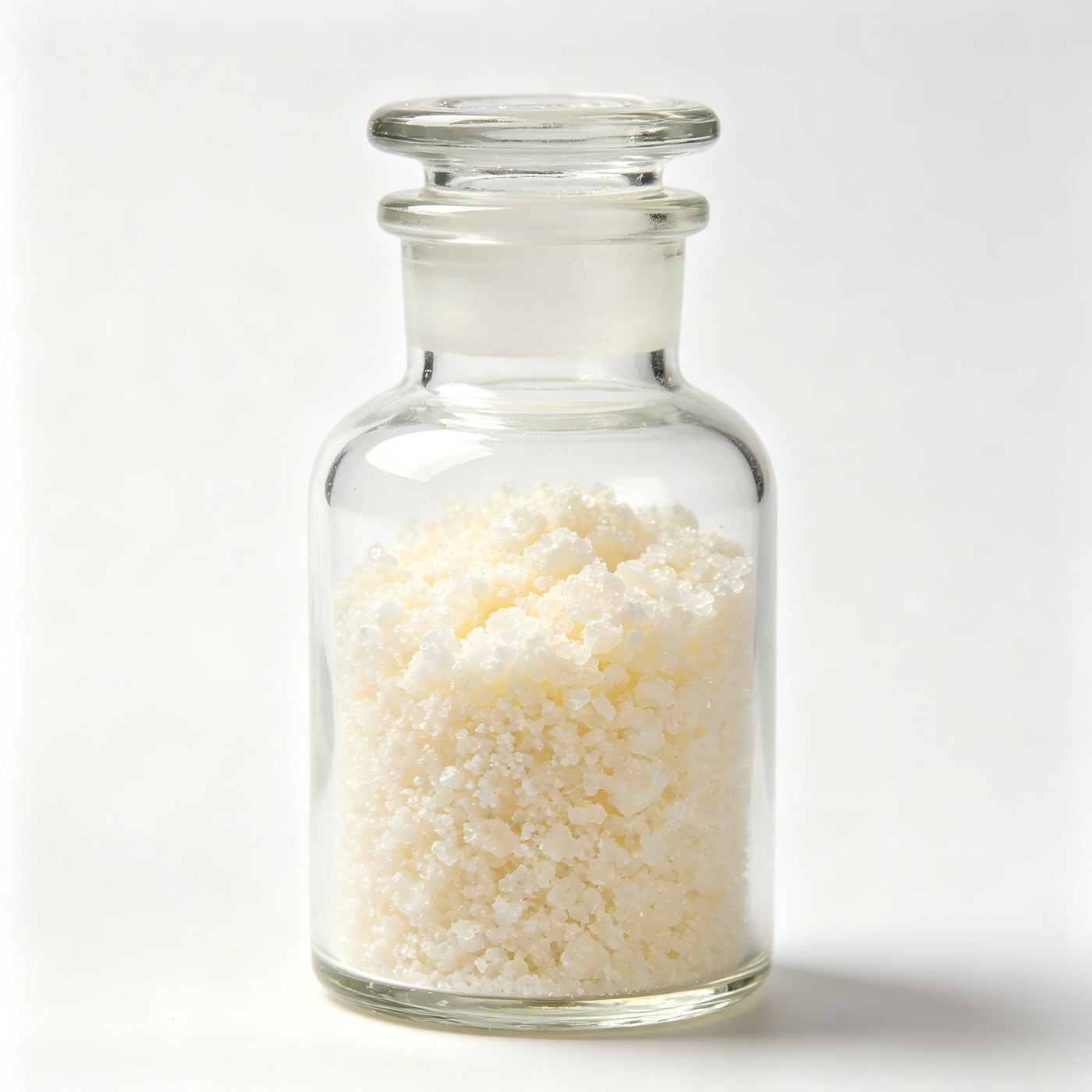
| Appearance | White to light yellow powder |
| Active Content | ≥90.0% |
| pH (1% solution) | 6.0–8.0 |
| Solubility | Soluble in water; slightly soluble in organic solvents |
| CMC | Approx. 8.2 mM |
Specifications
Sodium dodecyl sulfonate is supplied as an industrial flotation reagent with active content ≥90%. Its consistent quality profile allows application in selective collector systems and mixed reagent formulations for different mineral processing conditions.
Product performance can be optimized according to ore characteristics, flotation circuit design, pH conditions and collector combinations.
Storage & Handling
Store SDS in tightly sealed containers in a cool, dry and ventilated warehouse. Protect the product from moisture and direct sunlight. The material is hygroscopic, so containers should remain sealed when not in use.
During handling, wear chemical-resistant gloves, goggles and protective clothing. Avoid skin contact and inhalation of dust. In case of spillage, collect mechanically and dispose according to applicable environmental regulations.
Standard shelf life is ≥12 months under recommended storage conditions.
Advantages / Limitations
Advantages
Excellent selectivity for antimonite against quartz gangue.
Effective synergistic reagent with sodium oleate and other collectors.
Improves collector dispersion and solubility in mixed flotation systems.
Enhances resistance of primary collectors against ionic interference.
Suitable for complex polymetallic fluorite flotation circuits.
Cost-effective auxiliary flotation reagent for mineral upgrading.
Limitations
Limited collecting power as a standalone collector for many minerals.
Usually requires combination with other collectors or modifiers.
Performance is sensitive to flotation pH conditions.
Not suitable as a primary reagent for sulfide ore flotation.
Some complex ores may require additional depressants for improved selectivity.
Summary
Sodium dodecyl sulfonate (SDS) is a versatile anionic surfactant used as both a selective collector and synergistic flotation reagent in oxidized mineral processing. Its strongest application is antimonite flotation, where it provides high recovery and strong selectivity against quartz.
As an auxiliary collector, SDS enhances flotation performance in fluorite, magnesite, lithium, tungsten and manganese beneficiation through improved reagent dispersion and synergistic surface adsorption. With consistent-grade supply and technical formulation support, SDS provides reliable reagent solutions for global mineral processing operations.
Sodium Dodecyl Sulfonate – FAQ
Q1. What types of oxide and non-metallic minerals are suitable for Sodium Dodecyl Sulfonate flotation?
Sodium Dodecyl Sulfonate is an anionic surfactant that can be applied as a flotation reagent in selected oxide minerals and non-metallic mineral processing systems. Its application is mainly related to improving the surface hydrophobicity of target minerals under suitable pulp conditions. It may be considered for minerals such as fluorite, certain silicate minerals, and other oxide-based resources where surface properties allow collector adsorption. In practical mineral processing, reagent performance depends on mineral composition, liberation size, pulp pH, water chemistry, and the presence of gangue minerals. Laboratory flotation tests are recommended before industrial application to determine suitable dosage and process conditions.
Q2. How does Sodium Dodecyl Sulfonate perform in fluorite flotation?
Sodium Dodecyl Sulfonate can be evaluated as a flotation reagent in fluorite processing due to its ability to interact with mineral surfaces and modify interfacial properties. In fluorite flotation circuits, its effectiveness is influenced by factors such as pulp pH, calcium ion concentration, gangue composition, and the selection of depressants. For fluorite ores containing carbonate or silicate gangue minerals, reagent selectivity should be verified through batch flotation tests and mineralogical analysis. Proper control of conditioning time, reagent sequence, and pulp chemistry is important to achieve a balance between fluorite recovery and concentrate quality.
Q3. Can Sodium Dodecyl Sulfonate be used for lithium mineral flotation, including lepidolite and spodumene?
The application of Sodium Dodecyl Sulfonate in lithium mineral flotation depends on the specific mineral type and ore characteristics. Lepidolite and spodumene have different surface properties and usually require different flotation strategies. Sodium Dodecyl Sulfonate may be investigated as a surface-active reagent in certain lithium-bearing mineral systems, but its performance should be confirmed through laboratory flotation evaluation. Important testing parameters include mineral liberation size, pulp pH, collector dosage, depressant selection, and concentrate grade requirements. For commercial lithium processing projects, reagent selection should be based on systematic bench-scale and pilot-scale verification.
Q4. Is Sodium Dodecyl Sulfonate suitable for high calcium and magnesium mineral processing systems?
Sodium Dodecyl Sulfonate performance in high calcium and magnesium mineral systems depends strongly on water chemistry and mineral composition. Calcium and magnesium ions may interact with anionic reagents and influence adsorption behavior, dispersion, and flotation selectivity. In ores containing carbonate gangue minerals such as calcite and dolomite, proper use of depressants, pH regulators, and conditioning procedures may be required. Before industrial implementation, flotation testing under actual process water conditions is recommended to evaluate reagent consumption, selectivity, and concentrate quality. Adjustments to dosage and reagent combinations may be necessary for different ore sources.
Q5. What factors should be considered when using Sodium Dodecyl Sulfonate in high clay or slime-containing pulp?
High clay and slime content can significantly affect flotation performance by increasing reagent consumption, coating mineral surfaces, and reducing selectivity. When Sodium Dodecyl Sulfonate is applied in such conditions, pulp pretreatment, desliming, dispersant selection, and conditioning procedures should be carefully evaluated. Excessive fine particles may interfere with reagent adsorption and increase entrainment in flotation concentrates. Plant operators should monitor slurry density, particle size distribution, pulp viscosity, and water chemistry. Optimizing these parameters can help maintain stable flotation performance and reduce unnecessary reagent consumption.
Q6. Is Sodium Dodecyl Sulfonate stable in low-temperature flotation conditions?
The flotation performance of Sodium Dodecyl Sulfonate under low-temperature conditions depends on reagent solubility, mineral surface activity, pulp viscosity, and overall process conditions. Lower temperatures may influence adsorption kinetics and conditioning efficiency, especially in cold-region mining operations. In such applications, laboratory tests should be conducted at representative operating temperatures to evaluate dosage requirements and flotation response. Adjustments to conditioning time, pulp preparation, or reagent addition methods may help maintain stable performance. Site-specific testing is recommended for mines operating in high-altitude or cold-climate environments.
Q7. How should Sodium Dodecyl Sulfonate dosage be optimized during laboratory flotation tests?
During laboratory flotation testing, Sodium Dodecyl Sulfonate dosage should be optimized based on recovery, concentrate grade, selectivity, and reagent consumption. Typical evaluation procedures include testing different dosage levels, pulp pH conditions, conditioning times, and interactions with other flotation reagents. Mineralogical analysis, particle size distribution, and gangue characteristics should also be considered when interpreting results. The optimum dosage is not determined only by recovery improvement but also by maintaining concentrate quality and process stability. Laboratory results provide the basis for further pilot testing and industrial process adjustment.
Q8. Can Sodium Dodecyl Sulfonate be combined with other flotation reagents?
Sodium Dodecyl Sulfonate can potentially be used in combination with other flotation reagents depending on the mineral processing objective and reagent compatibility. In industrial flotation circuits, collectors, depressants, activators, and modifiers are often combined to improve selectivity and recovery. The interaction between Sodium Dodecyl Sulfonate and other reagents should be evaluated through laboratory testing because different minerals respond differently to reagent combinations. Important factors include addition sequence, pulp conditioning time, pH range, and water chemistry. A properly designed reagent scheme can help optimize flotation performance for complex ores.
Q9. What process parameters should be checked if Sodium Dodecyl Sulfonate shows reduced selectivity during plant operation?
If Sodium Dodecyl Sulfonate shows reduced selectivity during plant operation, several process parameters should be reviewed systematically. Key factors include ore mineralogy changes, feed particle size, pulp pH, slurry density, reagent dosage, water quality, and the concentration of dissolved ions. Changes in grinding conditions or increased slime generation may also affect flotation response. Operators should compare current operating data with historical plant performance and conduct laboratory verification when necessary. Process troubleshooting should focus on identifying the actual cause of selectivity loss rather than simply increasing reagent dosage.
Q10. How should Sodium Dodecyl Sulfonate be stored and handled for mining applications?
Sodium Dodecyl Sulfonate should be stored according to its technical specifications and safety documentation. Proper storage conditions generally include a dry, well-ventilated area away from excessive moisture, contamination, and incompatible materials. Before shipment and site use, customers should review the product technical data sheet and Safety Data Sheet (SDS) to confirm handling requirements, packaging conditions, and transportation classification. Maintaining product quality during storage is important because moisture exposure or improper handling may affect physical characteristics and dosing accuracy. Mining operations should establish suitable reagent storage and preparation procedures for consistent flotation performance.