


PANDA t-BAMBP Extractant for Rubidium Cesium Separation
Product Overview & Core Value
PANDA t-BAMBP Extractant (4-tert-butyl-2-(α-methylbenzyl)phenol) is a specialized substituted phenolic extractant developed for industrial rubidium (Rb⁺) and cesium (Cs⁺) separation. It is designed for complex alkali metal systems where conventional purification processes face challenges including low separation accuracy, target metal loss and high operating costs.
Based on a synergistic ion exchange and complexation mechanism, t-BAMBP provides high selectivity toward rubidium and cesium ions. Its Cs⁺/K⁺ separation coefficient exceeds 500, enabling efficient target ion enrichment from feed solutions containing high levels of potassium, sodium and lithium impurities.
With stable thermal and chemical performance, PANDA t-BAMBP Extractant supports long-cycle solvent extraction operations for rare alkali metal recovery, helping improve resource utilization and reduce purification complexity.
Application Scope
PANDA t-BAMBP Extractant is optimized for low-concentration rubidium and cesium enrichment and high-precision alkali metal separation. It is suitable for the following industrial application scenarios:
Lepidolite Lithium Extraction By-Product Recovery
The extractant can be applied for rubidium and cesium recovery from post-lithium precipitation solutions, supporting comprehensive utilization of valuable alkali metal resources and improving overall project economics.
Salt Lake Brine Resource Development
PANDA t-BAMBP Extractant enables selective enrichment of low-concentration Rb and Cs from high-magnesium and high-sodium salt lake brines, helping reduce downstream purification difficulty.
Lithium Battery Mother Liquid Recycling
The reagent supports recovery and purification of rare alkali metal resources from lithium battery recycling mother liquids, contributing to resource circulation and reduced industrial waste discharge.
Rare Alkali Metal Metallurgy
It is suitable for rubidium and cesium separation from ore leachates and metallurgical waste liquids for the production of high-purity rubidium salts and cesium salts.
Mechanism
PANDA t-BAMBP Extractant operates through a synergistic ion exchange and complexation mechanism. The active phenolic structure interacts selectively with rubidium and cesium ions, allowing preferential extraction from complex solutions containing competing alkali metal ions.
The high Cs⁺/K⁺ separation coefficient enables improved selectivity in impurity-rich feed systems, supporting stable solvent extraction circuits for alkali metal purification.
Physicochemical Properties
| Technical Item | Industrial Grade Index | Test Standard |
|---|---|---|
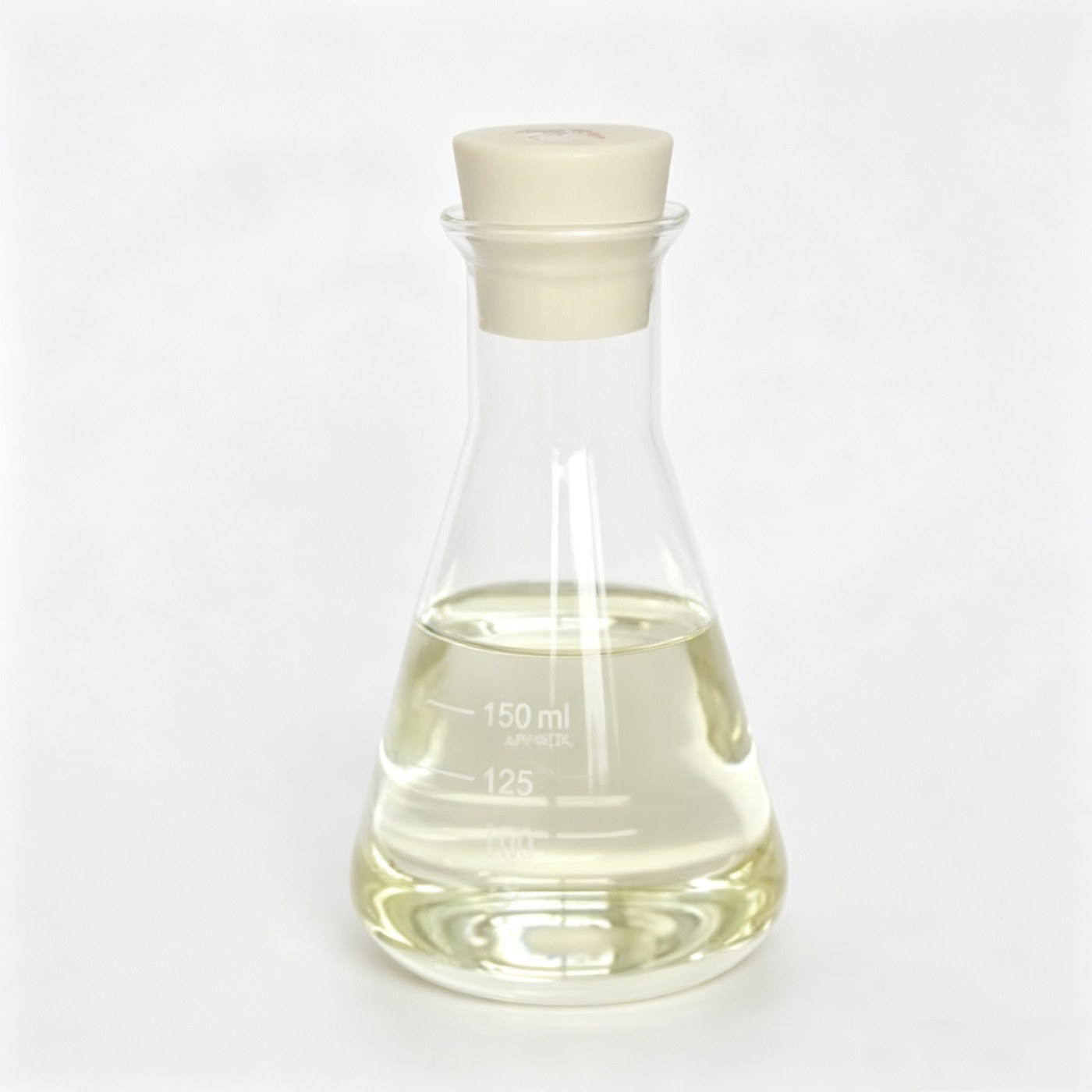
| Appearance (25℃) | Pale yellow transparent viscous liquid | Visual inspection |
| Purity | ≥90% | High Performance Liquid Chromatography (HPLC) |
| Moisture Content | ≤0.1% | Karl Fischer Method |
| Ash Content | ≤0.05% | Muffle Furnace Calcination (800℃) |
| Solubility Characteristics | Soluble in kerosene, 260# solvent oil and aromatic diluents; insoluble in water | 24-hour static observation at 25℃ |
Specifications
PANDA t-BAMBP Extractant is supplied as an industrial-grade solvent extraction reagent with controlled purity, low moisture content and stable solubility characteristics for continuous rare metal recovery and purification processes.
Storage & Handling
Saponification Pretreatment Requirements
Before industrial application, NaOH solution saponification pretreatment is required to maximize extraction performance. The recommended saponification rate is controlled between 20% and 40% to optimize ion complexation behavior and reduce dependence on feed solution alkalinity.
Emulsion Prevention Measures
Stable extraction operation requires effective removal of suspended impurities through flocculation and sedimentation. Maintaining the organic-aqueous phase ratio within 0.25:1 to 3:1 helps ensure efficient phase separation and reduce emulsion risks.
Storage & Transportation Specifications
Store in a sealed, cool, dry and ventilated warehouse. Keep away from fire sources, strong acids and strong oxidants. Normal temperature transportation is recommended while avoiding direct sunlight and mechanical impact. The standard shelf life is 12 months under proper storage conditions.
On-Site Safety Operation Standards
Operators should wear acid-base resistant gloves and protective goggles during handling to avoid direct skin and eye contact. In case of accidental contact, flush the affected area with clean water for at least 15 minutes and seek professional treatment if required.
Advantages / Limitations
Advantages
High selectivity for rubidium and cesium separation.
Cs⁺/K⁺ separation coefficient exceeding 500 for complex feed solutions.
Suitable for brine, leachate and metallurgical solution processing.
Stable thermal and chemical performance for long-cycle operation.
Supports recovery of valuable alkali metal resources from low-concentration sources.
Limitations
Saponification pretreatment is required before industrial application.
Feed impurity control and phase ratio management are important for stable extraction performance.
Summary
PANDA t-BAMBP Extractant is a specialized solvent extraction reagent for industrial rubidium and cesium separation. With high selectivity, stable physicochemical properties and compatibility with complex alkali metal feed systems, it provides an effective solution for salt lake brine processing, lithium resource by-product recovery, battery recycling liquids and rare metal metallurgy applications.
PANDA t-BAMBP Rubidium Cesium Extractant – FAQ
Q1. What types of rubidium and cesium resources are suitable for PANDA t-BAMBP Rubidium Cesium Extractant?
PANDA t-BAMBP Rubidium Cesium Extractant is designed for hydrometallurgical processes involving rubidium and cesium recovery from resource streams such as lepidolite leaching solutions, pollucite-related ores, and selected salt lake brines. The suitability of the extractant depends on the solution chemistry, including alkali metal concentration, impurity composition, acidity, and operating conditions. Before industrial application, laboratory solvent extraction tests are recommended to evaluate extraction selectivity, phase behavior, and compatibility with the specific feed solution.
Q2. How does PANDA t-BAMBP perform in rubidium and cesium extraction from sulfate systems?
PANDA t-BAMBP Rubidium Cesium Extractant can be evaluated for rubidium and cesium recovery from sulfate-based leaching systems where selective separation of alkali metals is required. Its extraction performance is influenced by factors such as sulfate concentration, solution acidity, metal ion concentration, extractant concentration, and organic-to-aqueous phase ratio. Laboratory equilibrium tests, including extraction isotherms and phase separation evaluation, are commonly used to determine suitable operating parameters for achieving stable extraction performance.
Q3. Can PANDA t-BAMBP achieve effective separation between rubidium and cesium?
PANDA t-BAMBP is developed for selective extraction applications involving rubidium and cesium separation. The actual separation efficiency depends on the chemical composition of the feed solution, including the relative concentration of sodium, potassium, lithium, and other competing ions. Process parameters such as extraction stages, phase ratio, scrubbing conditions, and stripping strategy need to be optimized according to the target product requirements. Laboratory counter-current simulation tests can provide technical data for process design and scale-up evaluation.
Q4. How does PANDA t-BAMBP control the co-extraction of lithium, sodium, potassium, magnesium, and calcium impurities?
In rubidium and cesium recovery processes, controlling the co-extraction of major alkali and alkaline earth metals is important for improving product purity. PANDA t-BAMBP performance should be evaluated based on the specific impurity profile of the leaching solution. Factors such as pH control, extractant concentration, phase ratio, and washing stages may influence selectivity. For high-salt solutions, laboratory testing is recommended to determine suitable conditions for reducing unwanted impurity transfer into the organic phase.
Q5. What operating pH and temperature ranges are recommended for PANDA t-BAMBP?
The optimal operating pH and temperature conditions for PANDA t-BAMBP depend on the composition of the rubidium and cesium feed solution and the selected extraction flowsheet. Excessive deviation from suitable operating conditions may affect extraction equilibrium, phase separation behavior, and reagent stability. During process development, parameters such as acidity, temperature, mixing time, and settling performance are typically investigated through laboratory solvent extraction tests to establish stable operating conditions for industrial applications.
Q6. How does PANDA t-BAMBP compare with crown ether and calixarene extractants for rubidium and cesium separation?
PANDA t-BAMBP and macrocyclic extractants such as crown ether and calixarene systems have different chemical structures and separation characteristics. The selection of extractant depends on factors including target metal concentration, impurity level, operating cost, phase behavior, and process requirements. PANDA t-BAMBP is evaluated based on extraction selectivity, operational compatibility, and suitability for practical solvent extraction systems. Comparative testing under the same solution conditions is recommended to determine the most appropriate separation technology.
Q7. How should the extraction stages and O/A ratio be optimized when using PANDA t-BAMBP in counter-current extraction?
The number of extraction stages and organic-to-aqueous (O/A) ratio are key parameters affecting rubidium and cesium recovery efficiency. For PANDA t-BAMBP solvent extraction systems, optimization should consider feed concentration, extraction equilibrium data, target recovery rate, and impurity separation requirements. Laboratory equilibrium experiments and counter-current simulation tests are commonly used to establish extraction and stripping stage requirements. These results provide important guidance for designing industrial mixer-settler or similar solvent extraction circuits.
Q8. What stripping methods are suitable for PANDA t-BAMBP after rubidium and cesium extraction?
The stripping process for PANDA t-BAMBP depends on the extracted metal complex, organic phase composition, and desired final product form. Acidic stripping solutions or other suitable aqueous systems may be evaluated to achieve efficient metal recovery from the loaded organic phase. Stripping efficiency can be improved by optimizing reagent concentration, phase ratio, temperature, and contact time. Laboratory stripping tests are recommended to determine suitable conditions for producing concentrated rubidium or cesium solutions.
Q9. How can potassium interference be controlled when PANDA t-BAMBP is used for high-potassium solutions?
High potassium concentrations may influence rubidium and cesium extraction selectivity because of the similar chemical properties among alkali metals. When applying PANDA t-BAMBP to high-potassium solutions, process optimization should focus on improving selectivity through suitable extraction conditions, phase control, and possible purification steps. Laboratory evaluation of distribution coefficients and impurity behavior is important for designing an effective separation process. The actual potassium tolerance depends on the composition of the feed solution and process configuration.
Q10. How should mining companies evaluate PANDA t-BAMBP before industrial application?
Before adopting PANDA t-BAMBP for commercial rubidium and cesium recovery, mining companies should conduct representative laboratory solvent extraction tests using actual process solutions. Key evaluation parameters include extraction capacity, selectivity against competing ions, phase separation performance, stripping efficiency, reagent stability, and overall process compatibility. These studies help determine suitable operating conditions and provide technical data for pilot-scale verification. A systematic evaluation approach reduces risks during industrial implementation of new extraction systems.