


PANDA014 Flotation Frother for Mineral Processing Applications
Brief Introduction
PANDA014 is an eco-friendly, low-toxicity alkyl-based composite higher alcohol flotation foaming agent designed for mineral processing operations. Formulated with composite higher alcohol components, it provides stable foam generation, good fluidity and reliable flotation performance as an alternative to traditional pine oil.
With physical properties close to butyl ether alcohol and moderate viscosity characteristics, PANDA014 supports consistent flotation performance across metallic and non-metallic mineral processing applications. In addition to its primary frothing function, the reagent provides mild collecting ability for easy-floating minerals, helping flotation plants simplify reagent combinations and optimize overall consumption.
The product is suitable for mining concentrators, flotation reagent distributors and industrial users requiring stable foam control, lower toxicity characteristics and convenient replacement of conventional frothers.
Application Scope
PANDA014 is widely applied in flotation circuits for non-ferrous metal sulfide ores, including copper, lead and zinc ores. It also supports recovery processes involving associated gold and silver contained in non-ferrous metal mineral resources.
Sulfide ore flotation: Provides stable frothing performance for copper, lead and zinc flotation operations.
Precious metal recovery circuits: Supports flotation workflows for associated gold and silver recovery from non-ferrous metal ores.
Non-metallic mineral flotation: Suitable for various non-metallic mineral processing applications.
Easy-floating mineral recovery: Provides mild collecting properties for graphite, sulfur, coal, talc and molybdenite flotation.
The operating method is consistent with conventional pine oil frother application, allowing existing flotation circuits to replace traditional frothers without additional process modifications.
Mechanism
PANDA014 contains composite higher alcohol components that disperse within flotation pulp and generate stable, uniform foam layers. These foam structures provide suitable conditions for mineral particle attachment and transportation to the flotation froth phase.
Compared with single-function frothers, PANDA014 provides additional mild collecting activity, which improves the floatability of easy-floating minerals. Its stable molecular structure maintains continuous foaming performance during long-duration flotation operations.
The reagent helps reduce foam instability caused by collapse or excessive fluctuation, supporting consistent flotation separation performance under continuous production conditions.
Physicochemical Properties
| Technical Item | Specification |
|---|---|
| Chemical Composition | Composite higher alcohol |
| Molecular Formula | ROH (R-alkyl group) |
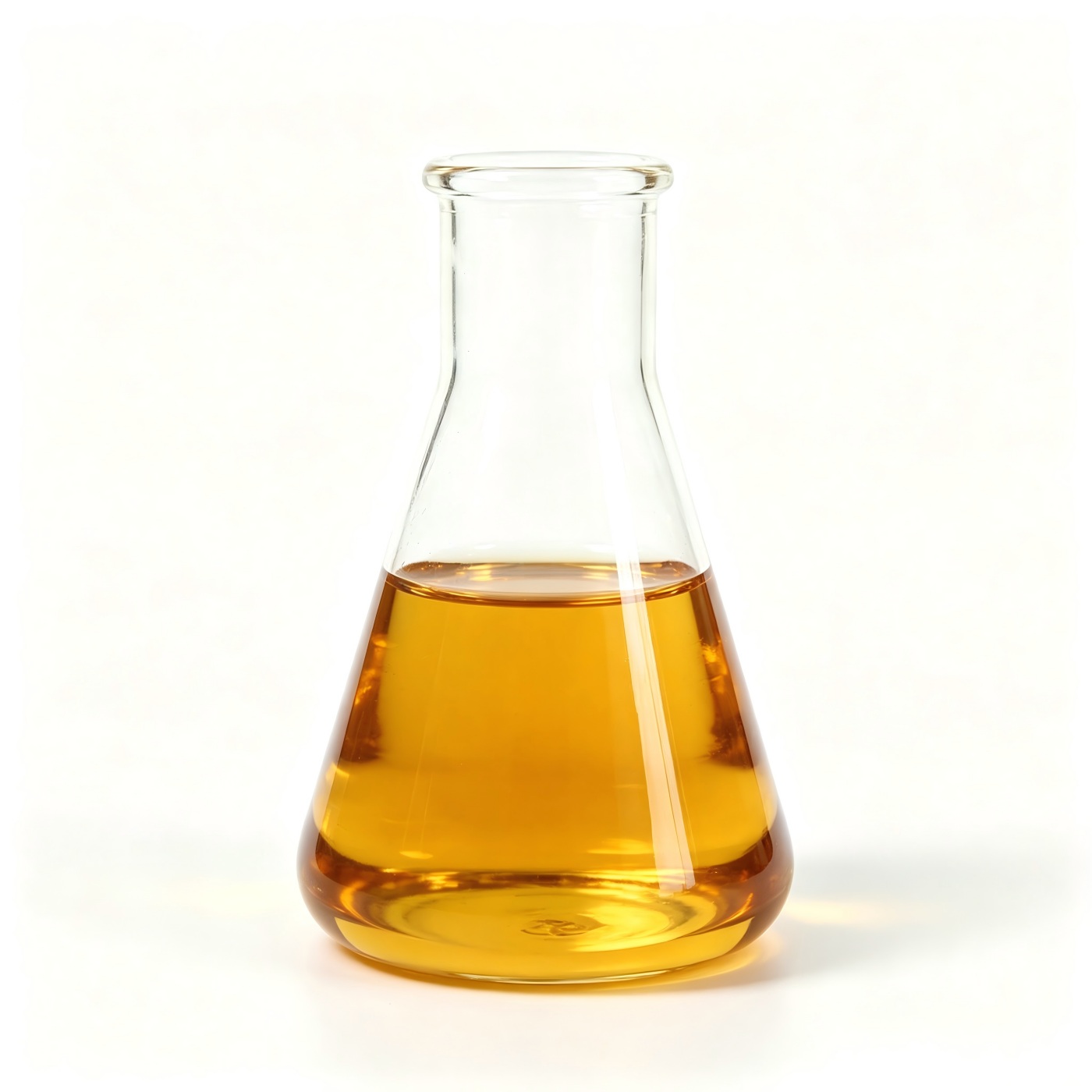
| Appearance | Yellow-brown to dark brown oily liquid |
| Hydroxyl Value | ≥145 KOHmg/g |
| Density (20℃) | 0.87~0.90 g/ml |
| Insoluble Matter | ≤5.0% |
| Solubility | Insoluble in water; soluble in ethanol and other organic solvents |
| Toxicity | Low toxicity (oral LD50 in mice = 6000mg/kg) |
| Shelf Life | 24 months |
| Packaging | 170kg iron drum |
Specifications
PANDA014 flotation frother is supplied with stable physical and chemical characteristics for industrial flotation reagent preparation and dosing requirements.
| Parameter | Value |
|---|---|
| Flotation Function | Foaming agent with mild collecting properties |
| Applicable Mineral Types | Sulfide ores and non-metallic minerals |
| Replacement Reference | Compatible with conventional pine oil application methods |
Storage & Handling
Store PANDA014 in dry, shaded and well-ventilated environments. Avoid water contamination, direct sunlight and open flame sources during storage and transportation.
Keep drums upright and avoid horizontal or inverted storage.
Follow MSDS requirements for handling, transportation and dosing operations.
Apply standard industrial chemical protection measures during transfer.
Maintain proper storage conditions to preserve reagent stability and flotation performance.
Advantages / Limitations
Advantages
Low-toxicity and eco-friendly formulation improves operational safety conditions.
Stable foaming ability helps reduce dosage requirements compared with traditional pine oil.
Combines frothing performance with mild collecting activity to simplify flotation reagent systems.
Stable physical and chemical properties support consistent batch performance.
Compatible with pine oil operating methods for easier industrial replacement.
Limitations
Insoluble in water and requires conventional oily reagent dosing systems.
Slightly higher viscosity than pine oil may require stable pipeline delivery conditions.
Flotation performance depends on ore properties, pulp chemistry and operating parameters.
On-site flotation optimization is required for different mineral processing conditions.
Summary
PANDA014 is a composite higher alcohol flotation frother developed for stable foam generation and mild collecting performance in mineral processing operations. It provides a low-toxicity alternative to traditional pine oil and is suitable for copper, lead, zinc, gold, silver, graphite and other mineral flotation applications.
With reliable foaming characteristics, convenient replacement capability and stable industrial performance, PANDA014 supports mining operations seeking consistent flotation control and optimized reagent management.
Alkyl Composite Higher Alcohol Eco-friendly Low-toxic Frother – FAQ
Q1. What types of ores are suitable for Alkyl Composite Higher Alcohol Eco-friendly Low-toxic Frother?
Alkyl Composite Higher Alcohol Eco-friendly Low-toxic Frother is suitable for various mineral flotation applications, including copper, nickel, lead-zinc, gold, fluorite, and other sulfide or non-metallic mineral processing systems. Its performance depends on ore mineralogy, grinding conditions, collector type, pulp properties, and flotation circuit design. The frother is mainly used to regulate bubble size, improve froth stability, and support selective mineral recovery. Laboratory flotation tests are recommended to determine the appropriate dosage and compatibility with collectors and other flotation reagents for specific ore conditions.
Q2. How does Alkyl Composite Higher Alcohol Eco-friendly Low-toxic Frother compare with MIBC in flotation performance?
Alkyl Composite Higher Alcohol Eco-friendly Low-toxic Frother and MIBC differ in molecular structure, froth characteristics, bubble control ability, and mineral selectivity behavior. Compared with conventional MIBC, composite higher alcohol frothers can provide different froth stability and bubble size distribution depending on flotation conditions. The actual performance is influenced by ore type, pulp density, collector system, and water chemistry. Selection between different frothers should be based on flotation testing results, including recovery rate, concentrate grade, froth drainage behavior, and overall circuit stability.
Q3. How should the optimal dosage and addition point of Alkyl Composite Higher Alcohol Eco-friendly Low-toxic Frother be determined?
The optimal dosage and addition point of Alkyl Composite Higher Alcohol Eco-friendly Low-toxic Frother should be determined through laboratory and industrial flotation evaluation. Key factors include ore properties, collector dosage, pulp density, grinding fineness, flotation stage, and required froth characteristics. The frother may be added in conditioning tanks or flotation cells depending on circuit requirements. Excessive dosage may cause overly stable froth and reduce selectivity, while insufficient dosage may result in poor bubble formation. Stepwise optimization helps achieve balanced recovery and concentrate quality.
Q4. Can Alkyl Composite Higher Alcohol Eco-friendly Low-toxic Frother be used in high-clay or high-slime mineral flotation systems?
Alkyl Composite Higher Alcohol Eco-friendly Low-toxic Frother can be evaluated for flotation circuits containing high levels of clay or fine slime particles, but performance depends on pulp rheology and mineral surface conditions. High slime content may consume reagents, affect bubble-mineral attachment, and reduce flotation selectivity. In such applications, desliming, dispersant addition, or optimized grinding and conditioning procedures may be required. Laboratory testing under actual ore conditions is recommended to determine the suitable frother dosage and process combination.
Q5. How does Alkyl Composite Higher Alcohol Eco-friendly Low-toxic Frother perform under different pH flotation conditions?
The flotation performance of Alkyl Composite Higher Alcohol Eco-friendly Low-toxic Frother depends on pulp chemistry, mineral type, and the reagent system used. It can be applied in different flotation environments, including alkaline and mildly acidic circuits, when properly optimized. Changes in pH may influence mineral surface properties, collector adsorption, bubble formation, and froth stability. Process engineers should evaluate froth behavior, recovery performance, and reagent compatibility at the target operating pH range to achieve stable flotation performance.
Q6. Can Alkyl Composite Higher Alcohol Eco-friendly Low-toxic Frother work together with collectors such as xanthates, dithiophosphates, and PANDA3477FL?
Alkyl Composite Higher Alcohol Eco-friendly Low-toxic Frother is generally evaluated together with various flotation collectors, including xanthates, dithiophosphates, and other specialized collectors such as PANDA3477FL, depending on the mineral processing objective. Frothers mainly control bubble formation and froth properties, while collectors modify mineral surface hydrophobicity. Their interaction affects flotation kinetics and selectivity. Proper reagent sequence, dosage optimization, and conditioning time should be determined through flotation testing to ensure compatibility and stable process operation.
Q7. How can Alkyl Composite Higher Alcohol Eco-friendly Low-toxic Frother be optimized in rougher, scavenger, and cleaner flotation stages?
The dosage strategy of Alkyl Composite Higher Alcohol Eco-friendly Low-toxic Frother varies according to flotation stage and circuit objectives. Rougher flotation generally requires sufficient froth generation to maximize mineral recovery, while cleaner flotation often requires more precise froth control to improve concentrate quality. Scavenger stages may require adjustment based on residual valuable mineral recovery requirements. Continuous monitoring of froth characteristics, concentrate grade, recovery rate, and reagent consumption helps optimize frother distribution throughout the flotation circuit.
Q8. How should Alkyl Composite Higher Alcohol Eco-friendly Low-toxic Frother be prepared and handled at flotation plants?
Proper preparation and handling of Alkyl Composite Higher Alcohol Eco-friendly Low-toxic Frother are important for maintaining consistent flotation performance. On-site preparation should follow the recommended concentration, mixing method, and dosing procedure provided by technical specifications. Storage conditions, temperature control, and compatibility with dosing equipment should also be considered. Uniform dispersion of the frother in the flotation circuit helps maintain stable bubble formation and reduces fluctuations caused by uneven reagent addition.
Q9. Can Alkyl Composite Higher Alcohol Eco-friendly Low-toxic Frother be used for non-metallic mineral flotation such as fluorite and barite?
Alkyl Composite Higher Alcohol Eco-friendly Low-toxic Frother can be considered for certain non-metallic mineral flotation applications, including fluorite and barite processing, depending on the flotation chemistry and collector system. Non-metallic mineral flotation often requires precise control of bubble size, froth stability, and mineral selectivity because gangue composition and surface properties vary significantly. Application performance should be confirmed through laboratory flotation tests to optimize frother dosage, collector compatibility, pH conditions, and concentrate quality requirements.
Q10. How does Alkyl Composite Higher Alcohol Eco-friendly Low-toxic Frother affect closed-circuit flotation water systems?
In closed-circuit flotation water systems, Alkyl Composite Higher Alcohol Eco-friendly Low-toxic Frother performance depends on recycled water quality, dissolved ions, residual reagents, and suspended solids content. Changes in water chemistry may influence froth stability and flotation selectivity. Process evaluation should consider interactions with other flotation reagents, tailings treatment requirements, and water recycling conditions. Regular monitoring of flotation performance and water quality parameters helps maintain stable operation and optimize reagent consumption in continuous production systems.