


Fatty Alcohol Polyoxyethylene Ether: A Synergistic Collector for Strategic Mineral Flotation
Application Scope
Fatty alcohol polyoxyethylene ether (AEO) functions primarily as a nonionic surfactant and synergistic co-collector in strategic mineral processing. By improving collector dispersion, surface activity, and co-adsorption behavior, AEO enhances the performance of conventional ionic collectors in complex flotation systems.
Primary Application — Lithium Ore Flotation
Fatty alcohol polyoxyethylene ether demonstrates significant synergistic effectiveness in lithium ore beneficiation, particularly in the reverse flotation separation of quartz from spodumene and other lithium-bearing minerals.
Studies on quartz flotation show that alcohol ethoxylates, including AEO-9, improve quartz recovery when combined with sodium oleate (NaOL) collector systems. The synergistic effect occurs through the formation of complexes between nonionic surfactants and oleate collectors, improving collector dispersion and transport toward mineral surfaces. This promotes denser collector adsorption and enhanced surface hydrophobicity.
Primary Application — Magnesium (Magnesite) Flotation
Fatty alcohol polyoxyethylene ether phosphate (AEOP), a derivative of AEO, has been applied as an effective collector for magnesite (MgCO₃) flotation.
Research demonstrates that AEOP achieves high magnesite recovery at lower concentrations and across a wider pH range compared with conventional collectors such as dodecyl phosphonic acid (DP) and dodecyl phosphonate (DOP). The phosphate groups chemically interact with magnesium sites on magnesite surfaces, while EO chains improve surface activity and collector dispersion.
Primary Application — Tin and Tungsten Oxide Mineral Flotation
The co-collector mechanism of AEO extends to tin and tungsten oxide mineral processing. In wolframite flotation systems, fatty acid collectors combined with nonionic surfactants demonstrate improved adsorption behavior and mineral floatability.
The synergistic interaction between AEO and sodium oleate promotes collector dispersion and facilitates transport of active collector species to oxide mineral surfaces, supporting improved flotation performance.
Secondary Application — Calcium-Bearing Mineral Separation
In phosphate ore flotation, ethoxylated fatty alcohols function as co-collectors with oleate systems for the selective separation of apatite from calcite and dolomite. The synergistic collector system improves adsorption selectivity under controlled flotation conditions.
Mechanism
Fatty alcohol polyoxyethylene ether (AEO, R(OCH₂CH₂)nOH) is a nonionic surfactant composed of a hydrophobic alkyl chain and hydrophilic polyoxyethylene (EO) chain.
In mixed collector systems, AEO interacts with anionic collectors such as sodium oleate through hydrogen bonding and hydrophobic interactions. This reduces repulsive forces between negatively charged collector groups, allowing improved collector packing and adsorption density on mineral surfaces.
The EO groups enhance water solubility, surface activity, and ionic tolerance. The ether bonds can form hydrogen bonding interactions with water, creating hydration effects that improve reagent stability in flotation environments.
Physicochemical Properties
| Parameter | Specification |
|---|---|
| CAS Number | 68213-23-0 (fatty alcohol polyoxyethylene ether, general) |
| Molecular Formula | R(OCH₂CH₂)nOH (R = C₁₂-C₁₈ alkyl) |
| Common Product | AEO-9 (n=9) |
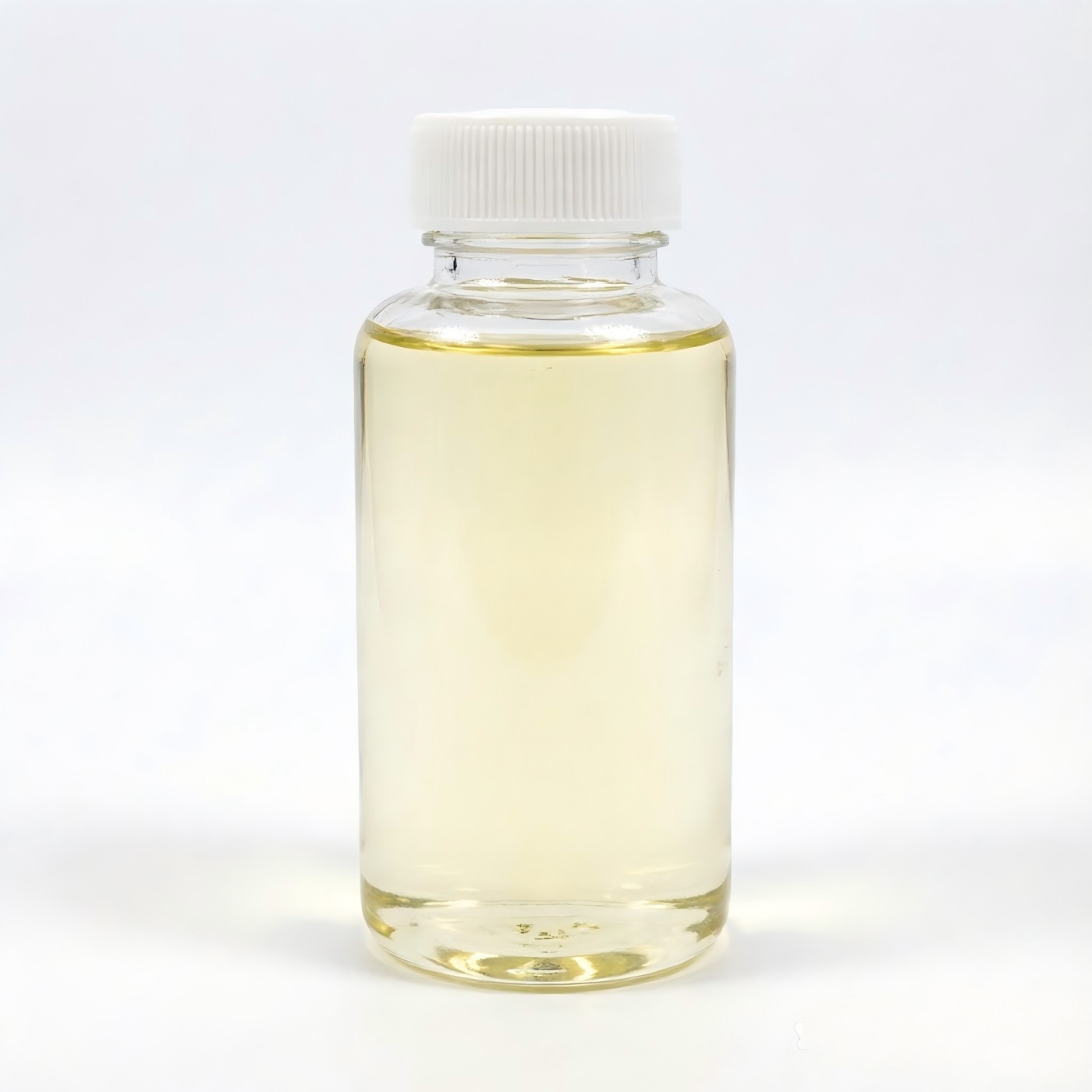
| Appearance | Colorless to pale yellow viscous liquid |
| HLB Value | 12–14 (AEO-9) |
| Solubility | Soluble in water |
| Typical Dosage | 5–50 g/t ore (as co-collector) |
Specifications
Fatty alcohol polyoxyethylene ether is typically supplied as an industrial nonionic surfactant reagent suitable for formulation with ionic collectors. Grade selection depends on alkyl chain length, EO number, mineral characteristics, and flotation circuit requirements.
Storage & Handling
Store fatty alcohol polyoxyethylene ether in tightly sealed containers in a cool, dry, and well-ventilated area. Protect the product from moisture and strong oxidizing agents.
Personnel handling AEO should wear chemical-resistant gloves, safety goggles, and protective clothing. In case of leakage or spillage, contain the material with inert absorbents and dispose according to local regulations.
Advantages / Limitations
Advantages
Enhances anionic collector performance through improved dispersion and co-adsorption.
Supports lower collector dosage requirements in mixed collector systems.
Demonstrates effectiveness in magnesite flotation through AEOP derivative applications.
Improves surface activity and ionic tolerance through EO chain functionality.
Provides biodegradable and environmentally compatible surfactant characteristics compared with some synthetic alternatives.
Limitations
Mainly functions as a synergistic reagent rather than a standalone collector.
Performance depends on EO chain length, alkyl structure, and collector formulation.
Requires optimization of pH conditions and collector ratios for specific ores.
Direct application may be limited without appropriate ionic collector combinations.
Summary
Fatty alcohol polyoxyethylene ether (CAS 68213-23-0) is a synergistic nonionic surfactant used in strategic mineral flotation systems. Its primary applications include lithium ore flotation, magnesite beneficiation through AEOP derivatives, and tin/tungsten oxide mineral processing.
By improving collector dispersion, transport, and adsorption behavior, AEO enhances flotation reagent performance and supports optimized collector systems. For mineral processing operations seeking improved flotation efficiency in lithium, magnesium, tin, and tungsten circuits, fatty alcohol polyoxyethylene ether provides a reliable synergistic reagent solution.
Fatty Alcohol Ethoxylate – FAQ
Q1. How does Fatty Alcohol Ethoxylate improve gold leaching performance in cyanidation processes?
Fatty Alcohol Ethoxylate can be used as a leaching enhancer in certain gold cyanidation applications by improving mineral surface wetting, reagent dispersion, and contact efficiency between the leaching solution and gold-bearing particles. Its nonionic surfactant properties may help reduce surface tension and improve penetration into porous or fine-grained ores. In practical applications, performance should be evaluated through laboratory bottle-roll tests by comparing gold dissolution rate, cyanide consumption, slurry behavior, and final recovery under controlled conditions. The optimal dosage depends on ore mineralogy, particle size distribution, pulp density, and existing reagent systems.
Q2. What factors should be considered when selecting Fatty Alcohol Ethoxylate dosage for gold leaching enhancement?
The dosage of Fatty Alcohol Ethoxylate should be determined through systematic metallurgical testing rather than using a fixed value. Key factors include ore oxidation state, sulfide content, clay content, pulp density, pH condition, cyanide concentration, and leaching time. Excessive addition may increase reagent consumption or affect downstream solid-liquid separation, while insufficient dosage may provide limited improvement in mineral surface interaction. Mining operations typically evaluate different dosage levels through laboratory leaching tests and pilot-scale trials to identify the most suitable operating range for their specific ore characteristics.
Q3. How does Fatty Alcohol Ethoxylate affect high-sulfur gold ore leaching performance?
High-sulfur gold ores often contain sulfide minerals that can reduce gold accessibility and increase reagent consumption during leaching. Fatty Alcohol Ethoxylate may assist the process by improving wetting and dispersion of mineral particles, which can enhance contact between oxidizing or leaching agents and exposed gold surfaces. However, its effectiveness depends strongly on the degree of sulfide encapsulation, oxidation pretreatment, and mineral composition. For refractory gold applications, Fatty Alcohol Ethoxylate is generally evaluated as a supporting reagent combined with appropriate oxidation methods rather than as a replacement for established pretreatment technologies.
Q4. How does Fatty Alcohol Ethoxylate concentration influence gold leaching kinetics?
The concentration of Fatty Alcohol Ethoxylate can influence leaching behavior by affecting solution surface tension, particle wetting, and reagent distribution within the slurry. A suitable concentration may improve contact efficiency between the leaching solution and fine mineral particles, potentially supporting faster dissolution kinetics. The actual impact should be determined through comparative tests measuring gold extraction rate, leaching time, and reagent consumption. Factors such as ore mineralogy, particle size, agitation intensity, and temperature also influence results, so concentration optimization should always be conducted under site-specific process conditions.
Q5. Can Fatty Alcohol Ethoxylate be used as a leaching enhancer for copper-containing gold ores?
Copper-containing gold ores may present challenges during cyanidation due to increased cyanide consumption and potential interference from copper minerals. Fatty Alcohol Ethoxylate may support leaching performance by improving mineral surface wetting and promoting more uniform reagent contact. However, it does not eliminate copper-related cyanide consumption issues and should be evaluated together with copper control strategies, mineralogical analysis, and process optimization measures. Laboratory testing should focus on gold recovery, copper dissolution behavior, cyanide consumption, and solution chemistry to determine whether Fatty Alcohol Ethoxylate provides practical benefits for a specific ore type.
Q6. How should Fatty Alcohol Ethoxylate be evaluated in high-clay gold ores during leaching?
High-clay gold ores can negatively affect leaching performance by increasing slurry viscosity, reducing reagent dispersion, and limiting contact between solution and mineral surfaces. Fatty Alcohol Ethoxylate may help improve slurry wetting characteristics and reagent distribution, which can be beneficial in some clay-rich ore systems. Evaluation should include pulp rheology, mixing behavior, gold dissolution rate, filtration performance, and overall recovery. The effectiveness depends on clay mineral type, particle size, and process conditions. Proper pretreatment, dispersion control, and optimized reagent combinations are usually required for stable industrial operation.
Q7. What is the role of EO number in Fatty Alcohol Ethoxylate selection for mineral leaching applications?
The ethylene oxide (EO) number of Fatty Alcohol Ethoxylate affects its hydrophilic-lipophilic balance, water solubility, and interaction with mineral surfaces. Different EO levels may provide different wetting, dispersion, and emulsification characteristics, which can influence performance in various leaching systems. For lithium, gold, or other mineral applications, reagent selection should consider ore surface properties, slurry chemistry, and the presence of other additives. Metallurgical testing is recommended to compare different EO grades based on extraction efficiency, reagent compatibility, and process stability rather than selecting a product solely based on EO number.
Q8. How does Fatty Alcohol Ethoxylate perform in nickel-cobalt hydrometallurgical leaching processes?
In nickel-cobalt hydrometallurgical processes, including acid leaching systems, Fatty Alcohol Ethoxylate may be investigated as a supporting additive to improve mineral wetting and reagent contact efficiency. Its application depends on factors such as ore type, acid concentration, temperature, pressure conditions, and impurity behavior. For laterite nickel ores or complex cobalt-bearing materials, process performance should be evaluated through controlled leaching experiments measuring metal dissolution, impurity extraction, filtration characteristics, and solution stability. Fatty Alcohol Ethoxylate should be considered as a process aid and not a substitute for established hydrometallurgical operating parameters.
Q9. How does Fatty Alcohol Ethoxylate compare with other surfactants in mineral leaching enhancement?
Fatty Alcohol Ethoxylate is a nonionic surfactant with good compatibility across a wide range of aqueous systems. Compared with ionic surfactants, it generally provides stable wetting and dispersion characteristics with lower sensitivity to changes in solution chemistry. However, the most suitable surfactant depends on the mineral system, leaching chemistry, and process objectives. In industrial applications, comparisons should include extraction improvement, reagent consumption, solution stability, downstream recovery effects, and environmental considerations. Selection should be based on metallurgical test results rather than general surfactant classification alone.
Q10. How should Fatty Alcohol Ethoxylate be tested before industrial-scale leaching application?
Before industrial implementation, Fatty Alcohol Ethoxylate should be evaluated through laboratory and pilot-scale testing under conditions that closely represent the actual mining process. Recommended evaluation parameters include metal extraction rate, leaching kinetics, reagent consumption, slurry behavior, filtration performance, and compatibility with existing chemicals. Bottle-roll tests, agitation leaching tests, or continuous pilot trials can help determine suitable dosage and operating conditions. Because ore mineralogy varies significantly between deposits, technical validation is essential to confirm whether Fatty Alcohol Ethoxylate provides measurable benefits for a specific leaching circuit.