


Calcium Peroxide: A Controlled-Release Oxidant for Strategic Gold Leaching
Application Scope
Calcium peroxide (CaO₂) functions primarily as a controlled-release oxygen source in precious metal cyanidation circuits. By providing sustained oxygen availability, it supports improved leaching kinetics in gold and silver processing, particularly for heap leaching and refractory ore applications where stable oxygen supply is required.
Primary Application — Gold Ore Cyanidation
Calcium peroxide is widely applied in gold ore leaching as an oxidant to enhance dissolved oxygen availability during cyanidation. Its slow and controlled oxygen release profile provides advantages over rapidly decomposing liquid oxidants such as hydrogen peroxide in heap and vat leaching environments.
Research demonstrates that calcium peroxide addition can improve gold leaching performance. At a dosage of 0.5 kg/t, controlled tests achieved 48.1% gold recovery, with optimized conditions reaching 53.4% recovery under P₈₀=6 mm and 0.06% NaCN conditions. The peroxide-assisted leaching (PAL) process developed for refractory ores accelerates leaching kinetics, supports recovery improvement, and helps reduce operating costs.
In copper-ammonia-thiosulfate alternative leaching systems, calcium peroxide also functions as an effective oxidant to support gold dissolution.
Primary Application — Refractory and Complex Gold Ores
Calcium peroxide demonstrates particular value in refractory gold ore processing, especially ores containing sulfide minerals or carbonaceous components that reduce conventional cyanidation efficiency.
For complex refractory silver-bearing ores containing minerals such as polybasite, pearcite, pyrargyrite, tetrahedrite, and argentite, calcium peroxide additions of 0.1–5.0 kg/t improve precious metal recovery while reducing cyanide consumption by up to 25%.
The reagent does not catalyze cyanide degradation, and the calcium hydroxide generated during decomposition may assist pH control, reducing or eliminating additional lime requirements in some leaching circuits.
Primary Application — Silver-Bearing Ore Leaching
Calcium peroxide is used in silver recovery from complex refractory silver ores where conventional cyanidation may achieve limited recovery due to silver minerals locked within resistant matrices.
The reagent can be incorporated into existing cyanidation circuits with limited process modification, supporting improved oxidation conditions for silver-bearing mineral dissolution.
Secondary Application — Gold Heap Leaching
Calcium peroxide is particularly suitable for gold heap leaching operations because of its extended oxygen release characteristics.
Compared with hydrogen peroxide, calcium peroxide maintains elevated dissolved oxygen levels over a longer period, making it suitable for percolation systems where oxygen availability throughout the ore bed influences leaching performance. Column leach studies confirm that calcium peroxide helps maintain oxygen concentration during extended leach cycles.
Mechanism
Calcium peroxide (CaO₂) releases oxygen through a controlled decomposition pathway in aqueous systems:
CaO₂ + 2H₂O → Ca(OH)₂ + H₂O₂
2H₂O₂ → O₂ + 2H₂O
The generated oxygen acts as an essential oxidant in gold cyanidation according to the Elsner reaction:
4Au + 8CN⁻ + O₂ + 2H₂O → 4Au(CN)₂⁻ + 4OH⁻
Unlike hydrogen peroxide, calcium peroxide provides sustained oxygen release, maintaining elevated dissolved oxygen levels for extended periods. This controlled release reduces frequent oxidant monitoring requirements and avoids excessive peroxide decomposition effects.
The calcium hydroxide byproduct can also contribute to alkaline condition maintenance and reduce lime consumption in suitable circuits.
Physicochemical Properties
| Parameter | Specification |
|---|---|
| CAS Number | 1305-79-9 |
| Molecular Formula | CaO₂ |
| Molecular Weight | 72.08 g/mol |
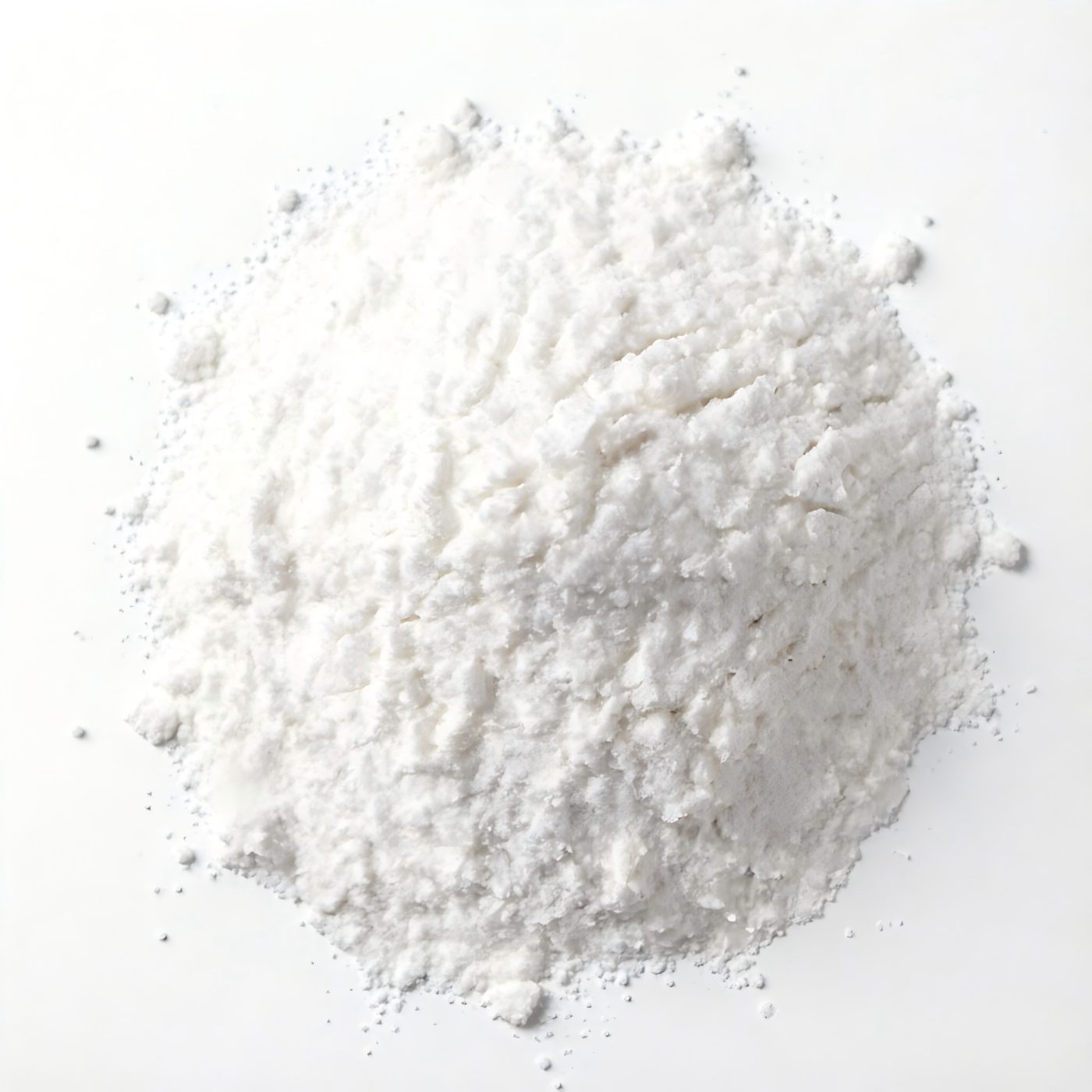
| Appearance | White to yellowish powder/granules |
| Assay (technical grade) | 60–75% CaO₂ (typical commercial grade) |
| Recommended Dosage | 0.1–5.0 kg/t ore (preferred 0.1–1.0 kg/t) |
| Optimal pH Range | 10–11 |
| Decomposition Characteristics | Slow, controlled oxygen release over 6+ hours |
Specifications
Calcium peroxide is supplied as a solid oxidizing reagent for mineral processing applications. Product performance depends on ore characteristics, cyanidation conditions, dosage control, and leaching circuit design.
Storage & Handling
Store calcium peroxide in tightly sealed containers in a cool, dry, and well-ventilated area. Protect the product from moisture, heat, and contamination.
Calcium peroxide is hygroscopic and may decompose under humid conditions. Operators should use appropriate PPE including chemical-resistant gloves, safety goggles, and dust protection during handling.
Compared with liquid hydrogen peroxide, the solid form provides simpler transportation, storage, and handling characteristics for mining operations.
Advantages / Limitations
Advantages
Sustained oxygen release over extended periods, suitable for heap leaching operations.
Can reduce cyanide consumption by up to 25% in suitable refractory precious metal applications.
Does not catalyze cyanide degradation, providing controlled oxidizing conditions.
Calcium hydroxide byproduct can assist pH control and reduce lime requirements.
Solid form provides simpler handling compared with liquid hydrogen peroxide.
Applicable to refractory and complex gold and silver ore processing.
Limitations
Performance depends on ore mineralogy and leaching conditions.
High dosage levels may generate calcium hydroxide layers that inhibit gold dissolution.
Requires optimization of dosage, pH, and leaching time for individual ores.
Main application scope remains focused on gold and silver cyanidation systems.
Summary
Calcium peroxide (CAS 1305-79-9) is a controlled-release oxidant for gold and silver cyanidation, particularly valuable in refractory ore treatment and heap leaching operations.
Through sustained oxygen release, calcium peroxide improves leaching conditions, supports recovery enhancement, and may reduce cyanide consumption in suitable applications. The peroxide-assisted leaching (PAL) process demonstrates its effectiveness in complex sulfide-bearing ores where stable oxygen availability is required.
For gold mining operations seeking optimized cyanidation performance with safer handling characteristics compared with liquid peroxide oxidants, calcium peroxide provides a reliable oxygen-release solution for industrial leaching circuits.
Calcium Peroxide – FAQ
Q1. How does Calcium Peroxide improve gold leaching performance in cyanidation processes?
Calcium Peroxide can be used as an oxygen-releasing reagent to enhance oxidation conditions during gold cyanidation. When added to the slurry, it gradually releases oxygen, which may improve the availability of dissolved oxygen and support the oxidation of certain reactive minerals that affect gold dissolution. The actual benefit depends on ore mineralogy, sulfide content, cyanide concentration, pH, and leaching time. Laboratory bottle-roll tests are commonly conducted to evaluate changes in gold extraction rate, cyanide consumption, and slurry behavior before applying Calcium Peroxide in industrial leaching circuits.
Q2. What is the recommended dosage range of Calcium Peroxide for gold leaching enhancement?
The suitable dosage of Calcium Peroxide varies depending on ore characteristics and process conditions, so there is no universal dosage value for all gold operations. Important factors include sulfide oxidation demand, pulp density, oxygen requirements, particle size, and existing aeration conditions. Metallurgical laboratories usually determine the optimal dosage through comparative leaching tests by monitoring gold recovery, dissolved oxygen level, cyanide consumption, and residual peroxide behavior. Proper dosage optimization helps avoid unnecessary reagent consumption while maintaining effective oxidation support during the leaching process.
Q3. How does Calcium Peroxide assist in the leaching of high-sulfur gold ores?
High-sulfur gold ores often contain sulfide minerals that consume oxygen and reagents during cyanidation, reducing gold accessibility. Calcium Peroxide may support the oxidation environment by releasing oxygen gradually within the slurry, which can assist in reducing the negative effects of oxygen deficiency. However, its effectiveness depends on the degree of sulfide encapsulation, mineral composition, and whether pretreatment processes are required. For refractory gold ores, Calcium Peroxide is generally evaluated as an oxidation-supporting reagent together with appropriate grinding, oxidation, or chemical conditioning methods.
Q4. How does Calcium Peroxide particle size affect gold leaching efficiency?
The particle size of Calcium Peroxide can influence its dissolution rate, oxygen release behavior, and distribution within the leaching slurry. Finer particles generally provide faster interaction with water and may release oxygen more rapidly, while coarser particles may provide a more gradual oxygen supply. The preferred particle size depends on the leaching system, agitation conditions, and required oxidation rate. Mining operations typically evaluate different particle sizes through laboratory testing to determine their influence on gold extraction kinetics, reagent utilization, and overall process stability.
Q5. Can Calcium Peroxide improve leaching performance for copper-bearing gold ores?
Copper-bearing gold ores may create challenges in cyanidation because copper minerals can increase cyanide consumption and affect gold recovery. Calcium Peroxide may help improve oxidation conditions and support mineral surface reactions by providing additional oxygen during the leaching process. However, it does not directly eliminate copper dissolution issues or cyanide-related challenges. Evaluation should include gold recovery, copper dissolution behavior, cyanide consumption, dissolved oxygen levels, and solution chemistry. Site-specific metallurgical testing is required to determine whether Calcium Peroxide provides practical benefits for a particular copper-gold ore system.
Q6. How should Calcium Peroxide be applied in nickel-cobalt hydrometallurgical leaching processes?
In nickel-cobalt hydrometallurgical applications, Calcium Peroxide may be investigated as an oxidation-supporting additive depending on the leaching route and ore characteristics. Its potential role is related to improving oxidation conditions and influencing the dissolution behavior of certain mineral phases. Application performance depends on factors such as acid concentration, temperature, pressure conditions, iron and sulfur content, and impurity control requirements. Laboratory and pilot-scale testing should evaluate metal extraction, impurity dissolution, residue characteristics, and reagent compatibility before considering industrial implementation in nickel-cobalt processing circuits.
Q7. How does Calcium Peroxide compare with Hydrogen Peroxide as a leaching oxidation enhancer?
Calcium Peroxide and Hydrogen Peroxide both provide oxidative effects but differ in their release behavior and handling characteristics. Hydrogen Peroxide provides rapid oxygen generation, while Calcium Peroxide releases oxygen more gradually and may offer longer-lasting oxidation support within certain slurry systems. The preferred option depends on process objectives, mineralogy, operating conditions, reagent storage requirements, and cost considerations. Metallurgical testing should compare oxidation efficiency, metal recovery, reagent consumption, and process stability to identify the most suitable oxidation enhancer for a specific leaching application.
Q8. How does Calcium Peroxide affect leaching performance in high-clay gold ores?
High-clay gold ores can reduce leaching efficiency by increasing slurry viscosity, limiting oxygen transfer, and affecting reagent dispersion. Calcium Peroxide may provide additional oxygen within the slurry and help maintain oxidative conditions in systems where oxygen availability is limited. However, successful application also depends on clay control, grinding conditions, pulp rheology, and proper pH management. Laboratory evaluation should include gold dissolution rate, slurry characteristics, oxygen availability, and filtration performance to determine whether Calcium Peroxide contributes to improved process stability in clay-rich ore treatment.
Q9. What factors should be considered when using Calcium Peroxide in acid leaching processes?
When applying Calcium Peroxide in acid leaching systems, important factors include acid concentration, mineral composition, temperature, oxidation requirements, and potential calcium-related interactions. The reagent may influence oxidation conditions, but its performance must be evaluated together with the overall chemical balance of the leaching circuit. For minerals such as nickel, cobalt, manganese, or other metal-bearing ores, testing should focus on target metal dissolution, impurity behavior, residue characteristics, and downstream recovery compatibility. Proper process evaluation ensures that Calcium Peroxide supports the leaching objective without creating operational challenges.
Q10. How should Calcium Peroxide be tested before industrial-scale leaching application?
Before industrial use, Calcium Peroxide should be evaluated through laboratory and pilot-scale metallurgical testing under conditions similar to the actual processing environment. Recommended evaluations include leaching kinetics, metal extraction rate, dissolved oxygen behavior, reagent consumption, residue analysis, and compatibility with existing process chemicals. Factors such as dosage, particle size, addition method, pH, and leaching time should be optimized based on the specific ore characteristics. Because mineral deposits vary significantly, technical validation is essential to confirm whether Calcium Peroxide provides measurable improvements in a commercial leaching operation.