


Acidithiobacillus ferrooxidans: A Bioleaching Agent for Strategic Metal Extraction
Application Scope
Acidithiobacillus ferrooxidans (A. ferrooxidans) is a Gram-negative, acidophilic bacterium widely applied in biomining and bioleaching technologies. Through its ability to oxidize iron and sulfur compounds, it helps mobilize strategic metals including gold, lithium, nickel, cobalt, copper, and molybdenum from complex mineral resources.
Primary Application — Gold Recovery from Refractory Ores
A. ferrooxidans is primarily applied in gold ore processing, especially for refractory sulfide ores where gold is encapsulated within pyrite or arsenopyrite matrices. The microorganism promotes sulfide oxidation through ferric iron regeneration, exposing trapped gold without relying on aggressive chemical oxidation methods.
Laboratory bioleaching studies on refractory gold ores achieved 54.64% gold recovery over 12 days under pH 2.0–3.0 and 25–30°C conditions, compared with 0.31% recovery in uninoculated controls. In BIOX-TC systems combining biooxidation with thiocyanate leaching, mixed microbial cultures containing A. ferrooxidans achieved up to 86.9% gold recovery.
Primary Application — Lithium Extraction from Jadarite
A. ferrooxidans demonstrates potential application in lithium recovery from jadarite (LiNaB₃SiO₇OH). Research shows that microbial activity enhanced lithium release by more than 50%, exceeding 120 mg/L after 21 days through biofilm formation and mineral interaction.
The effectiveness of bioleaching depends strongly on mineral structure. Jadarite shows improved response, while aluminosilicate minerals such as spodumene and lepidolite exhibit slower lithium release under similar conditions.
Primary Application — Nickel and Cobalt Recovery
A. ferrooxidans is also utilized for nickel and cobalt extraction from secondary resources and waste materials. In bioleaching of waste lithium battery residues, it achieved nickel bioleaching ratios of 75.5% and cobalt ratios of 69.1%. Mixed microbial systems incorporating A. ferrooxidans further improved recovery performance.
Secondary Application — Molybdenum and Copper Recovery
A. ferrooxidans contributes to copper and molybdenum extraction through sulfide mineral oxidation. In nickel-molybdenum tailings treatment, copper extraction reached 85.46%, demonstrating its applicability in recovering valuable metals from secondary resources.
Secondary Application — Other Strategic Metals
The microorganism has also been reported to mobilize elements including vanadium, chromium, zinc, gallium, arsenic, and uranium, providing potential applications across broader strategic mineral recovery systems.
Mechanism
Acidithiobacillus ferrooxidans functions as a chemolithoautotrophic microorganism, using ferrous iron (Fe²⁺) and reduced sulfur compounds as energy sources. It accelerates the regeneration of ferric iron (Fe³⁺), which acts as the primary oxidant for sulfide mineral dissolution.
During bioleaching, Fe³⁺ oxidizes sulfide minerals and releases metal ions into solution, while A. ferrooxidans continuously converts Fe²⁺ back into Fe³⁺ through oxygen-dependent oxidation. This catalytic cycle improves mineral dissolution efficiency with reduced chemical reagent requirements.
Physicochemical Properties
Biological agent: Acidithiobacillus ferrooxidans
Microorganism type: Gram-negative acidophilic bacterium
Metabolism: Chemolithoautotrophic and aerobic
Energy sources: Fe²⁺ and reduced sulfur compounds
Optimal temperature: 25–30°C
Optimal pH: 1.5–3.0
Specifications
| Parameter | Specification |
|---|---|
| CAS Number | Not applicable (biological agent) |
| Taxonomy | Acidithiobacillus ferrooxidans |
| Optimal Temperature | 25–30°C |
| Optimal pH | 1.5–3.0 |
| Energy Sources | Fe²⁺, reduced sulfur compounds |
| Typical Applications | Bioleaching, BIOX pre-treatment |
Storage & Handling
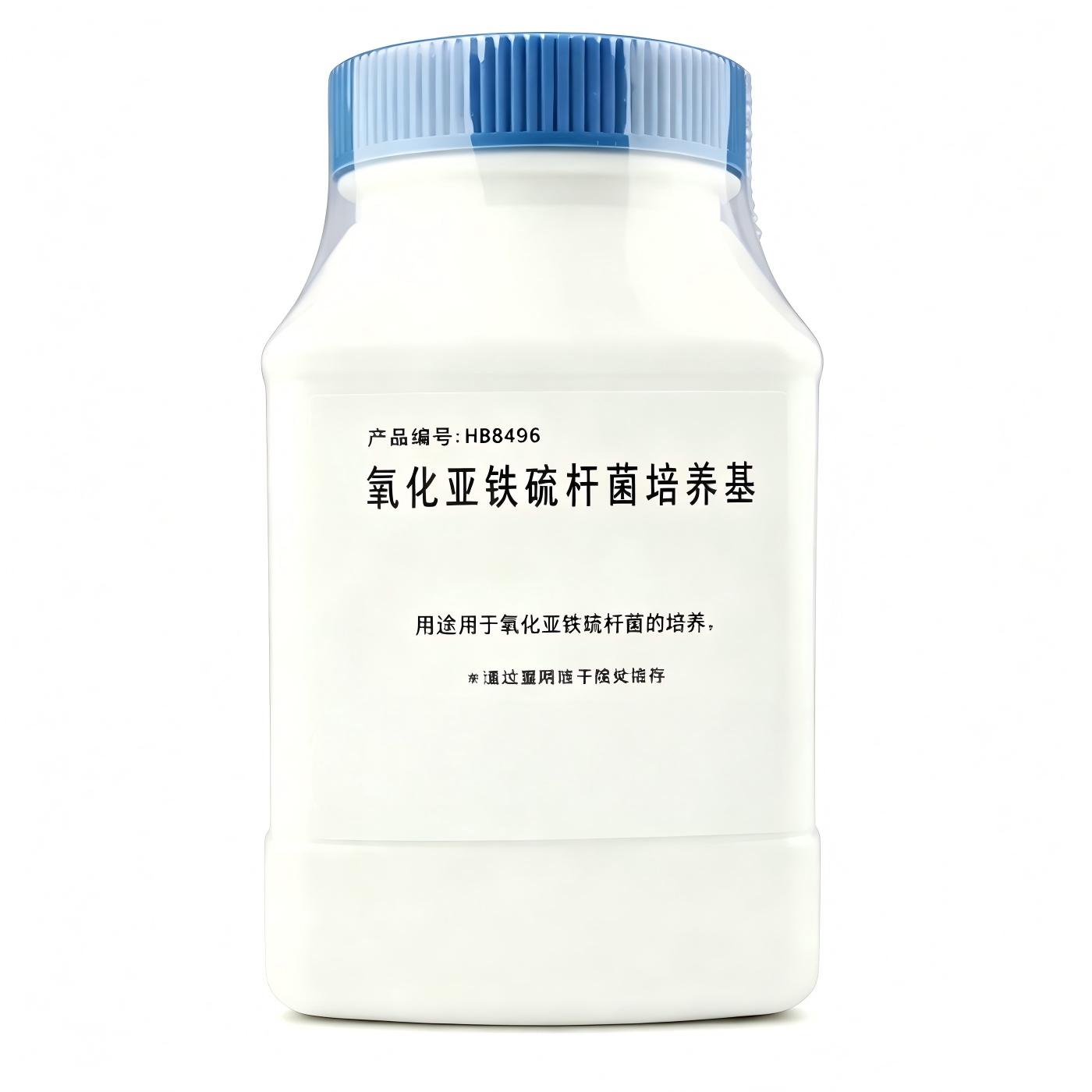
A. ferrooxidans is generally supplied as an active liquid culture or freeze-dried powder. Before application, it requires cultivation in specialized 9K medium under controlled acidic conditions.
The microorganism is sensitive to organic compounds, high temperatures above 40°C, and unsuitable pH conditions. Bioleaching operations require continuous monitoring of pH and temperature, with proper environmental management to prevent acid mine drainage risks.
Advantages / Limitations
Advantages:
Environmentally friendly alternative to aggressive chemical leaching methods
Effective for refractory sulfide ores with low conventional recovery rates
Low energy requirement compared with pyrometallurgical processing
Suitable for recovering metals from low-grade ores and waste materials
Compatible with mixed microbial systems for enhanced recovery
Limitations:
Slower kinetics compared with conventional chemical leaching methods
Requires strict control of pH and temperature conditions
Performance depends strongly on ore mineralogy
Heap bioleaching scale-up requires engineering optimization
Environmental management is required to control acid generation
Summary
Acidithiobacillus ferrooxidans is a versatile bioleaching agent for strategic metal extraction from complex mineral resources. Its primary applications include refractory gold recovery, lithium extraction from jadarite, and nickel/cobalt recovery from secondary materials. By regenerating ferric iron through microbial oxidation, it enables sustainable mineral dissolution with reduced chemical consumption. For mining operations processing refractory ores, tailings, and secondary resources, A. ferrooxidans provides an environmentally compatible bioleaching solution requiring optimized biological process control.
Acidithiobacillus Ferrooxidans – FAQ
Q1. How does Acidithiobacillus Ferrooxidans improve bioleaching performance in sulfide gold ores?
Acidithiobacillus Ferrooxidans is an acidophilic microorganism commonly used in bioleaching systems to promote the oxidation of sulfide minerals through iron and sulfur oxidation activities. In high-sulfur gold ores, it can help break down sulfide matrices that encapsulate gold particles, improving gold accessibility during subsequent leaching processes. The effectiveness depends on mineral composition, temperature, pH, dissolved oxygen, iron concentration, and bacterial activity. Industrial evaluation usually includes oxidation rate, sulfide removal efficiency, gold recovery improvement, and downstream leaching performance through laboratory and pilot-scale biooxidation tests.
Q2. What is the optimal inoculation level of Acidithiobacillus Ferrooxidans for mineral bioleaching?
The suitable inoculation level of Acidithiobacillus Ferrooxidans depends on ore characteristics, initial bacterial activity, pulp density, mineral oxidation demand, and operating conditions. A higher initial bacterial population may accelerate early oxidation, while excessive inoculation may not provide proportional benefits if nutrient supply, oxygen transfer, or iron availability becomes limiting. Mining operations typically determine the appropriate inoculation range through laboratory adaptation tests and bioleaching experiments by monitoring oxidation rate, bacterial growth, iron conversion, and metal recovery performance. Optimization should be based on the specific ore and process environment.
Q3. How does Acidithiobacillus Ferrooxidans assist in copper bioleaching processes?
In copper sulfide bioleaching, Acidithiobacillus Ferrooxidans contributes to the oxidation of ferrous iron and sulfide minerals, supporting the generation of ferric iron, which acts as an important oxidizing agent in mineral dissolution. This microbial activity can enhance copper release from certain sulfide minerals under suitable acidic conditions. Performance evaluation should consider copper extraction rate, oxidation efficiency, acid consumption, iron balance, and leaching time. The actual improvement depends on mineralogy, particle size, temperature, pH control, and microbial adaptation to the ore environment.
Q4. What role does Acidithiobacillus Ferrooxidans play in bioleaching of nickel and cobalt ores?
Acidithiobacillus Ferrooxidans may be applied in selected nickel and cobalt bioleaching systems where sulfide minerals require oxidation to improve metal release. Through iron oxidation and interaction with sulfide phases, the bacteria can support the breakdown of certain mineral structures and enhance metal dissolution conditions. Application performance depends on ore type, sulfur content, acidity, temperature, oxygen availability, and microbial adaptation. Laboratory and pilot testing are recommended to evaluate nickel and cobalt extraction, impurity dissolution, bacterial activity, and overall process compatibility before industrial implementation.
Q5. How do temperature and pH conditions affect Acidithiobacillus Ferrooxidans bioleaching performance?
Acidithiobacillus Ferrooxidans requires controlled acidic and temperature conditions to maintain effective biological activity. Changes in pH can influence iron oxidation capability, bacterial growth, and mineral dissolution behavior, while temperature affects metabolic activity and oxidation kinetics. In practical bioleaching operations, conditions are commonly optimized based on bacterial strain characteristics, ore mineralogy, and process design. Monitoring parameters such as pH, redox potential, dissolved oxygen, ferrous-to-ferric iron ratio, and bacterial population helps maintain stable bioleaching performance.
Q6. How should Acidithiobacillus Ferrooxidans be evaluated for high-sulfur gold ore treatment?
For high-sulfur gold ores, Acidithiobacillus Ferrooxidans should be evaluated through controlled biooxidation tests before industrial application. Important evaluation parameters include sulfide oxidation efficiency, arsenic and sulfur behavior, gold liberation improvement, oxidation time, and compatibility with downstream cyanidation or alternative leaching processes. Factors such as mineral encapsulation, particle size, pulp density, nutrient availability, and oxygen supply significantly influence performance. Laboratory adaptation tests and pilot-scale trials help determine whether the bacterial oxidation process can provide practical benefits for a specific refractory gold ore.
Q7. How does Acidithiobacillus Ferrooxidans compare with other bioleaching microorganisms?
Acidithiobacillus Ferrooxidans is one of the most widely studied microorganisms in mineral bioleaching due to its ability to oxidize ferrous iron and sulfur compounds under acidic conditions. Compared with other bioleaching microorganisms, its application suitability depends on factors such as temperature range, mineral composition, oxidation requirements, and process conditions. For some ores, mixed microbial communities containing different acidophilic species may provide better adaptation. Selection should be based on metallurgical testing, microbial activity evaluation, oxidation efficiency, and target metal recovery requirements.
Q8. Can Acidithiobacillus Ferrooxidans be used for refractory gold ores containing arsenic minerals?
Acidithiobacillus Ferrooxidans may assist in treating certain arsenic-bearing refractory gold ores by promoting sulfide oxidation and improving gold exposure. During biooxidation, arsenic-containing minerals may undergo chemical changes, but the actual behavior depends on mineral structure, arsenic form, oxidation conditions, and downstream treatment requirements. Careful evaluation is required to monitor arsenic dissolution, residue characteristics, environmental management factors, and gold recovery improvement. Biooxidation is generally considered a pretreatment approach rather than a direct replacement for all gold extraction methods.
Q9. How can nutrient conditions be optimized for Acidithiobacillus Ferrooxidans bioleaching systems?
Nutrient management is important for maintaining bacterial activity during bioleaching. Acidithiobacillus Ferrooxidans requires suitable sources of essential nutrients, iron availability, acidity control, and oxygen supply to sustain metabolic activity. In industrial systems, nutrient optimization focuses on maintaining bacterial growth without creating unnecessary chemical consumption or process instability. Laboratory studies typically evaluate bacterial population, oxidation rate, redox potential, iron conversion, and metal extraction performance under different nutrient conditions. The optimal nutrient strategy depends on ore composition, reactor design, and operating conditions.
Q10. How should Acidithiobacillus Ferrooxidans be tested before industrial bioleaching application?
Before industrial-scale application, Acidithiobacillus Ferrooxidans should undergo laboratory adaptation, bioleaching testing, and pilot-scale validation under conditions representative of the target ore deposit. Key evaluation factors include microbial activity, oxidation efficiency, metal recovery improvement, operating temperature, pH stability, nutrient requirements, and downstream process compatibility. Because mineral deposits vary significantly in sulfide content and chemical composition, microbial performance must be verified for each specific application. Proper technical evaluation helps determine whether bioleaching can provide operational and economic advantages within an existing mineral processing flowsheet.