


Sodium Dodecyl Sulfate: A Versatile Surfactant in Strategic Mineral Flotation and Leaching
Application Scope
Sodium dodecyl sulfate (SDS) is an anionic surfactant widely applied in strategic mineral processing as both a flotation collector and a surface performance enhancer. Its hydrophobic alkyl chain and sulfate functional group enable selective mineral interaction, collector synergy, and surface modification in lithium, gold, rare earth, and lead processing systems.
Primary Application — Lithium Ore Flotation
SDS demonstrates significant application potential in lithium ore beneficiation, particularly in lepidolite flotation. When combined with cationic collectors such as cetyltrimethylammonium bromide (CTAB), SDS forms a mixed collector system that improves selective separation between lepidolite and quartz.
Under optimized conditions with SDS concentration of 60 mg/L, CTAB concentration of 10 mg/L, and neutral pH conditions around 7.0, the mixed collector system achieved a Li₂O concentrate grade of 5.16% with 91.17% recovery. The synergistic mechanism involves SDS pre-adsorption on lepidolite surfaces, creating favorable conditions for CTAB adsorption through charge compensation and enhanced surface hydrophobicity.
SDS alone has limited selectivity for lepidolite flotation; however, its synergistic role in mixed collector systems provides improved separation efficiency for lithium-bearing minerals.
Primary Application — Gold Adsorption Enhancement
SDS is used as a surface modifier and adsorption enhancer in gold processing, especially for carbonaceous gold ores where activated carbon performance may be affected by surface impurities.
Research indicates that SDS treatment modifies activated carbon surfaces by increasing specific surface area from 772.6 to 807.8 m²/g, improving adsorption performance for gold-cyanide complexes. SDS also acts as a surface cleanser by removing impurities and exposing additional active adsorption sites.
The critical micelle concentration (CMC) of SDS, approximately 8.23 mM, provides an important reference parameter for optimizing surfactant-assisted gold adsorption processes.
Primary Application — Rare Earth Element Recovery
SDS functions as an anionic collector in rare earth element (REE) recovery through foam flotation processes. It has been studied for the separation and recovery of rare earth ions including La(III), Ce(III), Gd(III), and Yb(III) from mixed solutions.
The selective recovery performance of SDS-based foam flotation depends on solution chemistry, pH conditions, and competing ions. Differences in flotation kinetics between rare earth elements and gangue ions such as Al, Zn, Ca, and Mg provide additional separation control.
SDS has also been applied in rare earth phosphor recovery from waste fluorescent lamps, where flotation processes achieved REE recovery rates of 66–82%.
Secondary Application — Lead Mineral Processing
In lead mineral processing, SDS serves as a selective collector for reverse flotation separation involving anglesite (PbSO₄). Under alkaline conditions, SDS demonstrates improved selectivity for gypsum removal compared with conventional amine collectors.
The adsorption mechanism involves interaction between SDS sulfate groups and calcium-containing sites on gypsum surfaces, enabling selective removal of calcium-bearing impurities from lead concentrates.
Secondary Application — Rare Earth Phosphor Recovery
SDS has been applied for recovering rare earth phosphors containing yttrium, europium, and other rare earth elements from waste fluorescent lamp materials. Two-stage flotation processes using SDS have demonstrated 66–82% recovery with improved REE enrichment.
Mechanism
Sodium dodecyl sulfate (CH₃(CH₂)₁₁OSO₃Na) is an anionic surfactant composed of a hydrophobic dodecyl chain and a hydrophilic sulfate head group. Its mineral processing functions are based on selective adsorption, hydrophobic modification, and collector synergy.
As a flotation collector, SDS adsorbs onto mineral surfaces through electrostatic interactions and hydrophobic forces, increasing surface hydrophobicity and improving bubble attachment.
In mixed collector systems, SDS interacts with cationic collectors through charge compensation and co-adsorption, increasing collector density on target mineral surfaces.
As a surface modifier, SDS improves activated carbon performance by removing impurities and increasing available adsorption sites for gold complexes.
In rare earth foam flotation, SDS forms metal-surfactant complexes or precipitated species that attach to bubbles for separation.
Physicochemical Properties
| Parameter | Specification |
|---|---|
| CAS Number | 151-21-3 |
| Molecular Formula | C₁₂H₂₅NaO₄S |
| Molecular Weight | 288.38 g/mol |
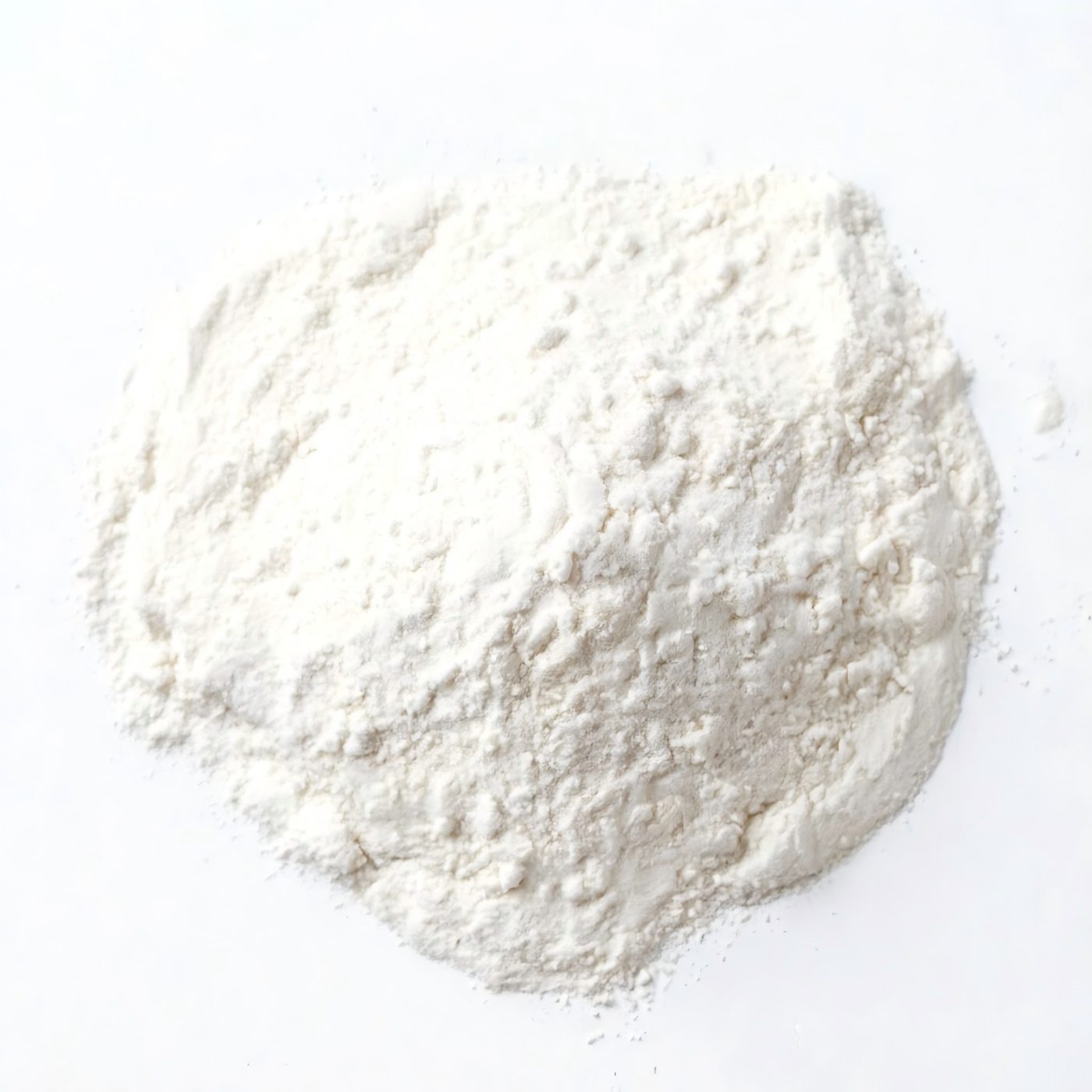
| Appearance | White to pale yellow powder |
| Assay | ≥99.0% |
| Critical Micelle Concentration | 8.23 mM |
| Solubility | Highly soluble in water |
Specifications
Sodium dodecyl sulfate is supplied as a high-purity anionic surfactant suitable for mineral flotation and hydrometallurgical applications. Performance depends on collector combination, mineral surface properties, pH conditions, and process optimization.
Storage & Handling
Store SDS in tightly sealed containers in a cool, dry, and well-ventilated area. Protect the product from moisture and strong oxidizing agents because the material is hygroscopic.
Operators should wear suitable personal protective equipment including chemical-resistant gloves, safety goggles, and dust protection during handling. Spilled material should be collected and disposed of according to local regulations.
Advantages / Limitations
Advantages
Provides strong synergy with cationic collectors for lepidolite flotation, achieving over 91% Li₂O recovery under optimized conditions.
Enhances activated carbon adsorption performance for gold processing applications.
Applicable across lithium, gold, rare earth, and lead mineral processing systems.
Well-established surfactant chemistry with predictable surface interaction behavior.
Widely available with consistent reagent quality.
Limitations
Limited effectiveness as a standalone collector in some mineral systems.
Performance depends strongly on pH, collector combination, and ore mineralogy.
Requires process optimization for different mineral compositions.
May provide lower selectivity than specialized collectors in certain flotation circuits.
Summary
Sodium dodecyl sulfate (CAS 151-21-3) is a versatile anionic surfactant for strategic mineral processing applications. Its primary roles include lepidolite flotation through collector synergy, gold adsorption enhancement through activated carbon surface modification, and rare earth recovery through foam flotation.
With well-characterized surface chemistry and flexible application potential, SDS provides a reliable reagent option for mineral processors seeking improved flotation selectivity, adsorption performance, and strategic metal recovery efficiency across lithium, gold, rare earth, and lead circuits.
Sodium Dodecyl Sulfate (SDS) – FAQ
Q1. How does sodium dodecyl sulfate (SDS) enhance mineral leaching performance in hydrometallurgical applications?
Sodium dodecyl sulfate (SDS) is an anionic surfactant that can be used as a process additive in certain hydrometallurgical systems to improve wetting, dispersion, and contact between solid mineral particles and leaching solutions. By reducing interfacial tension, SDS may help improve solution penetration into fine or poorly wetted mineral surfaces under suitable conditions. Its effectiveness depends on ore mineralogy, particle size distribution, leaching chemistry, reagent compatibility, and operating parameters. Laboratory testing is recommended to evaluate its influence on metal dissolution rate, reagent consumption, slurry behavior, and overall leaching performance before industrial application.
Q2. What factors determine the optimal dosage of sodium dodecyl sulfate (SDS) in mineral leaching processes?
The optimal dosage of sodium dodecyl sulfate depends on ore characteristics, mineral surface properties, slurry concentration, leaching reagent system, and target metal recovery requirements. A suitable SDS dosage can improve particle wetting and dispersion, while excessive addition may increase reagent consumption or create unwanted effects in downstream processes. Dosage optimization is usually conducted through laboratory leaching tests by monitoring metal extraction, slurry stability, surface interaction, and filtration performance. The appropriate dosage should be determined based on specific ore conditions rather than using a fixed value for all applications.
Q3. Can sodium dodecyl sulfate improve gold leaching performance in cyanide-based gold recovery systems?
Sodium dodecyl sulfate may be investigated as a surfactant additive in certain gold leaching systems where improved mineral wetting or slurry dispersion is required. Its potential role is related to modifying solid-liquid interactions rather than directly acting as a gold lixiviant. In cyanidation processes, gold recovery is primarily controlled by factors such as gold liberation, cyanide concentration, oxygen availability, pH, and mineral interference. SDS application should therefore be evaluated through comparative laboratory tests measuring gold dissolution rate, cyanide consumption, slurry behavior, and final recovery performance.
Q4. How does sodium dodecyl sulfate concentration affect metal leaching efficiency?
The concentration of sodium dodecyl sulfate can influence surface activity, particle dispersion, and contact efficiency between mineral surfaces and leaching solutions. At an appropriate concentration, SDS may improve solution distribution and mineral wetting, which can support more effective leaching reactions. However, excessive concentration may affect foam formation, downstream separation, or reagent balance. During process development, SDS concentration should be evaluated together with parameters such as pH, temperature, particle size, leaching time, and primary lixiviant concentration to determine the most suitable operating conditions for a specific ore type.
Q5. How can sodium dodecyl sulfate be applied in refractory gold ores with high sulfur content?
For refractory gold ores containing sulfide minerals, sodium dodecyl sulfate may be evaluated as a surface-active additive to improve slurry characteristics and mineral-liquid interaction during pretreatment or leaching stages. However, SDS does not replace oxidation or liberation processes required for sulfur-bearing refractory ores. Effective treatment normally depends on mineralogical analysis, oxidation strategy, particle size control, and suitable leaching chemistry. Laboratory testing should be conducted to determine whether SDS provides benefits in terms of gold dissolution, reagent distribution, slurry behavior, and overall process efficiency for the specific refractory ore.
Q6. What is the role of sodium dodecyl sulfate in copper mineral leaching applications?
In copper leaching systems, sodium dodecyl sulfate may be considered as a surfactant additive to improve mineral surface accessibility and enhance contact between copper-bearing minerals and leaching solutions under appropriate conditions. Its effect depends on copper mineral type, gangue composition, particle size, acid or alkaline leaching chemistry, and operating parameters. Performance evaluation should include copper dissolution rate, reagent consumption, solution stability, and impurity behavior. SDS should be tested as part of the overall leaching system because its influence varies significantly between different copper ore types and process conditions.
Q7. How does sodium dodecyl sulfate compare with sodium thiosulfate in mineral leaching applications?
Sodium dodecyl sulfate and sodium thiosulfate serve different functions in hydrometallurgical processes. Sodium thiosulfate is a sulfur-based complexing reagent mainly investigated for alternative gold leaching systems, while SDS is primarily a surfactant used to modify surface properties, wetting, and dispersion behavior. The two reagents have different mechanisms and cannot be directly substituted for each other. Selection depends on the process objective, ore characteristics, target metal, and recovery flowsheet. Laboratory evaluation is recommended to determine whether a surfactant additive or a lixiviant system is more appropriate for a specific application.
Q8. How does sodium dodecyl sulfate affect leaching performance in fine or clay-rich ores?
Fine and clay-rich ores can create challenges in leaching due to poor permeability, particle aggregation, and uneven reagent distribution. Sodium dodecyl sulfate may help modify surface interactions and improve slurry dispersion in some systems, potentially supporting better contact between leaching solutions and mineral particles. However, the actual effect depends on clay mineral type, slurry properties, leaching chemistry, and operating conditions. Laboratory tests should evaluate metal extraction, slurry rheology, filtration behavior, and reagent compatibility to determine whether SDS provides practical advantages for clay-containing ores.
Q9. What factors should be considered when selecting sodium dodecyl sulfate for industrial leaching projects?
Selection of sodium dodecyl sulfate for industrial leaching applications requires consideration of ore mineralogy, target metal, leaching method, reagent compatibility, water chemistry, and downstream processing requirements. Important evaluation factors include SDS purity, dosage range, slurry concentration, pH conditions, temperature, and interaction with other process chemicals. Laboratory and pilot-scale testing can help verify its influence on metal recovery, solution stability, filtration characteristics, and operating costs. A systematic evaluation ensures that SDS is applied as a suitable process additive within the overall hydrometallurgical flowsheet.
Q10. What is the difference between sodium dodecyl sulfate (SDS) and sodium dodecylbenzene sulfonate (SDBS) in leaching applications?
Sodium dodecyl sulfate (SDS) and sodium dodecylbenzene sulfonate (SDBS) are both anionic surfactants, but they have different molecular structures and surface activity characteristics. Their performance in mineral processing depends on adsorption behavior, mineral surface properties, water chemistry, and process conditions. SDS is commonly selected for applications requiring specific wetting and dispersion properties, while SDBS may exhibit different interfacial behavior due to its aromatic sulfonate structure. Comparative testing is recommended to evaluate their effects on mineral suspension, reagent interaction, metal dissolution, and downstream process compatibility for a particular leaching system.