


Sodium Peroxide: A Powerful Oxidant for Strategic Metal Leaching and Ore Pretreatment
Application Scope
Sodium peroxide (Na₂O₂) is a powerful alkaline oxidant used in hydrometallurgical processing, mainly as a sulfide oxidation reagent and pretreatment chemical for improving metal recovery from refractory ores.
Its applications are concentrated in refractory gold ore pretreatment, molybdenum extraction from molybdenite concentrates, nickel-cobalt recovery processes, and tungsten ore sample preparation.
Gold Recovery from Refractory Ores
Sodium peroxide demonstrates significant application value in the pretreatment of gold-bearing refractory ores, especially high-sulfur concentrates where sulfide minerals limit cyanidation efficiency.
Under alkaline conditions, Na₂O₂ oxidizes sulfur species that interfere with cyanide leaching, helping remove passivating sulfur layers and expose gold surfaces for improved recovery.
For high-sulfur refractory gold concentrates containing pyrite-locked gold, oxidation of sulfur in the concentrate can reduce sulfur content in oxidized residues below 1.5%, enabling subsequent cyanidation gold leaching rates above 90%.
In combined pretreatment processes, Na₂O₂ addition at 3–5 kg/t with ammonium fluoride and sodium carbonate in alkaline conditions, followed by electro-oxidation, increased gold leaching rates from 17.4% to 88% at room temperature and atmospheric pressure. The process also reduced cyanide consumption from 40 kg/t to 10 kg/t.
Sodium peroxide is also used as an oxidizing component in auxiliary gold leaching systems, where it helps remove surface films and improves contact between gold particles and cyanide solutions.
Molybdenum Extraction Application
Sodium peroxide provides effective oxidation performance for molybdenum recovery from molybdenite (MoS₂) concentrates.
During mechanochemical processing, Na₂O₂ converts molybdenum sulfide into water-soluble sodium molybdate dihydrate (Na₂MoO₄·2H₂O), enabling subsequent hydrometallurgical recovery.
The oxidation reaction:
2MoS₂ + 6Na₂O₂ → 3Na₂S + 2Na₂MoO₄ + Na₂SO₄
is thermodynamically feasible, with sodium molybdate formation confirmed through XRD analysis after mechanochemical treatment.
Nickel-Cobalt Recovery Application
In nickel-cobalt processing, sodium peroxide functions as an oxidizing reagent for iron conversion and selective enrichment of valuable metals.
For laterite nickel ores, Na₂O₂ oxidizes Fe²⁺ to Fe³⁺, followed by phosphate precipitation processes. Reported recovery rates reached 93.3% for nickel and 81.0% for cobalt.
This oxidation mechanism supports improved separation efficiency by controlling iron behavior during hydrometallurgical treatment.
Tungsten Ore Analysis Application
Sodium peroxide fusion is widely applied in tungsten ore sample preparation for analytical determination.
The fusion process enables decomposition of acid-resistant tungsten minerals, including scheelite and wolframite, allowing subsequent multi-element analysis.
Mechanism
Sodium peroxide (Na₂O₂) is a strong alkaline oxidant. In aqueous environments, it decomposes according to the reaction:
2Na₂O₂ + 2H₂O → 4NaOH + O₂↑
During refractory gold pretreatment, Na₂O₂ oxidizes sulfide sulfur species including S²⁻ and elemental sulfur into sulfate compounds, removing sulfur passivation layers and improving gold accessibility during cyanidation.
The alkaline environment helps stabilize oxidation conditions and reduces acid generation during sulfide mineral breakdown.
For molybdenite processing, sodium peroxide oxidizes Mo(IV) in MoS₂ into Mo(VI), producing soluble sodium molybdate. In nickel laterite processing, Na₂O₂ promotes oxidation of ferrous iron into ferric iron for selective precipitation.
Physicochemical Properties
| Parameter | Specification |
|---|---|
| CAS Number | 1313-60-6 |
| Molecular Formula | Na₂O₂ |
| Molecular Weight | 77.98 g/mol |
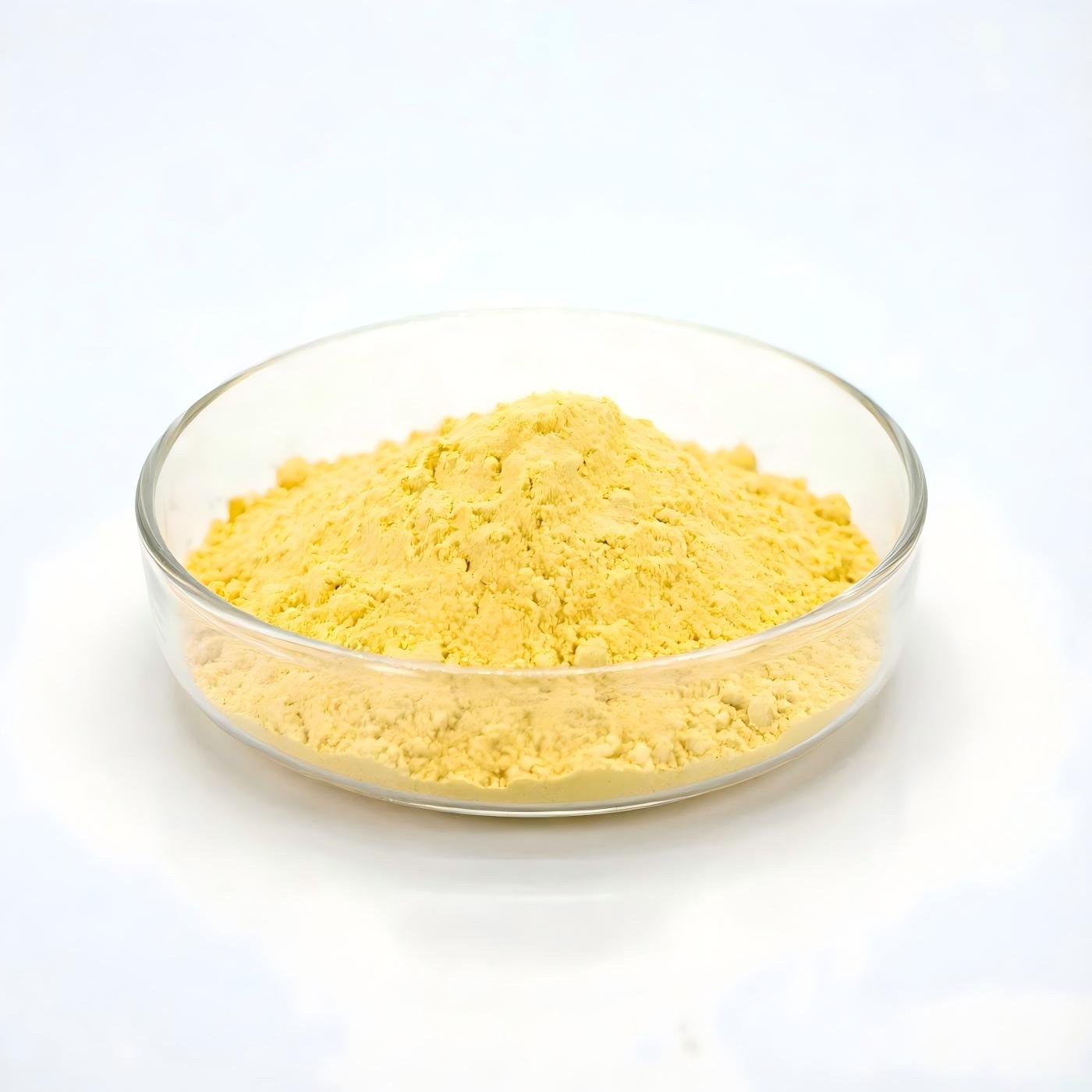
| Appearance | White to pale yellow powder/granules |
| Assay (Technical Grade) | ≥95.0% |
| Available Oxygen | 20.5% (Theoretical Maximum) |
| Optimal Pretreatment pH | Alkaline (10–11) |
Specifications
Technical-grade sodium peroxide requires controlled purity and stable oxidizing performance for mineral processing applications.
The reagent is typically applied under alkaline pretreatment conditions, with performance influenced by sulfide mineral content, reagent dosage, moisture control and downstream recovery processes.
Storage & Handling
Store sodium peroxide in tightly sealed, moisture-proof containers in a cool, dry and well-ventilated area. Keep the material separated from organic substances, reducing agents and combustible materials.
Na₂O₂ is highly reactive and hygroscopic. It decomposes when exposed to moisture and can react strongly with water, acids and organic materials.
Operators should wear appropriate protective equipment including chemical-resistant gloves, safety goggles and protective clothing during handling.
In case of spillage, collect dry material without using water and dispose of the waste according to applicable local regulations.
Advantages / Limitations
Advantages
Powerful alkaline oxidant for refractory sulfide ore pretreatment.
Improves gold leaching performance by oxidizing sulfur-bearing passivation layers.
Can increase gold leaching rates from refractory concentrates with reduced cyanide consumption in combined processes.
Converts molybdenite into water-soluble sodium molybdate for simplified recovery.
Supports nickel-cobalt enrichment through controlled iron oxidation and precipitation.
Effective under ambient temperature and atmospheric pressure conditions in suitable processes.
Limitations
High reactivity requires specialized storage and handling procedures.
Moisture exposure causes decomposition and reduces oxidizing efficiency.
Reacts strongly with water, acids and organic materials.
Large-scale applications may require careful reagent consumption management.
Summary
Sodium peroxide (CAS 1313-60-6) is a powerful alkaline oxidant used for strategic metal processing, including refractory gold ore pretreatment, molybdenum extraction, nickel-cobalt recovery and tungsten sample preparation.
Through sulfide oxidation and metal conversion mechanisms, Na₂O₂ helps unlock valuable metals from complex mineral systems by improving downstream recovery conditions.
For mining operations processing high-sulfur refractory concentrates or molybdenum-bearing materials, sodium peroxide provides an effective pretreatment oxidant option, while requiring strict moisture control and specialized handling due to its high reactivity.
Sodium Peroxide – FAQ
Q1. How does sodium peroxide work as an oxidation enhancer in mineral leaching processes?
Sodium peroxide is a strong oxidizing reagent that can generate oxidative conditions through the formation of peroxide species and alkaline environments during dissolution. In hydrometallurgical applications, it may assist in oxidizing certain sulfide minerals, improving mineral liberation, or modifying the chemical environment for metal extraction. Its effectiveness depends on ore mineralogy, reagent dosage, pH, temperature, and reaction time. Laboratory testing is essential to evaluate oxidation efficiency, target metal recovery, impurity behavior, and reagent consumption before applying sodium peroxide in an industrial leaching process.
Q2. What factors determine the optimal dosage of sodium peroxide in gold leaching applications?
The optimal dosage of sodium peroxide depends on the oxidation demand of the ore, sulfide content, associated minerals, and the selected leaching system. A suitable dosage should provide sufficient oxidation capacity while avoiding unnecessary reagent consumption or excessive changes in solution chemistry. Evaluation parameters normally include gold dissolution rate, recovery percentage, sulfide oxidation level, and dissolved impurity concentration. Laboratory bottle-roll tests under controlled conditions, including pH, pulp density, temperature, and leaching time, are recommended to determine the appropriate sodium peroxide dosage for a specific gold ore.
Q3. Can sodium peroxide improve the leaching performance of high-sulfur gold ores?
High-sulfur gold ores often require enhanced oxidation because sulfide minerals can encapsulate gold particles and consume leaching reagents. Sodium peroxide may provide a strong oxidative environment that assists in breaking down certain sulfide components and improving gold accessibility under suitable conditions. However, the actual performance depends on sulfide mineral type, gold occurrence, reagent interaction, and process design. Metallurgical testing should evaluate sulfide oxidation, gold liberation, recovery improvement, and reagent consumption to confirm whether sodium peroxide provides technical advantages for a particular refractory gold ore.
Q4. How does sodium peroxide particle size affect oxidation-enhanced leaching performance?
The particle size of sodium peroxide can influence dissolution behavior, reaction speed, and reagent distribution in the leaching system. Finer particles generally provide faster contact with the slurry, while larger particles may dissolve more gradually depending on mixing conditions and process requirements. The suitable particle size should balance oxidation efficiency, handling characteristics, and reagent utilization. Laboratory testing can compare different particle sizes by monitoring oxidation potential, metal dissolution rate, recovery performance, and reagent consumption. Actual optimization depends on ore characteristics, slurry conditions, and the design of the leaching process.
Q5. How should sodium peroxide be added during gold leaching to improve process stability?
The addition method of sodium peroxide can significantly influence oxidation efficiency and overall leaching stability. Controlled addition is generally preferred because it helps maintain a consistent oxidizing environment and reduces sudden changes in solution chemistry. Important factors include addition rate, mixing efficiency, pulp density, pH control, and interaction with other reagents. Before industrial application, laboratory and pilot testing should evaluate different addition methods by measuring gold dissolution kinetics, recovery rate, oxidation performance, and reagent consumption. The optimized addition strategy should be selected according to the specific ore and plant conditions.
Q6. How does sodium peroxide affect copper-bearing gold ores during leaching?
Copper-bearing gold ores may create additional challenges because copper minerals can consume oxidizing reagents and influence gold leaching selectivity. Sodium peroxide may affect copper mineral oxidation behavior depending on copper mineral type, solution chemistry, and operating conditions. A proper evaluation should consider gold recovery, copper dissolution, reagent consumption, and downstream treatment requirements. Laboratory tests using representative ore samples are recommended to determine whether sodium peroxide improves oxidation conditions or causes increased dissolution of unwanted minerals. The final application strategy should be based on metallurgical results rather than reagent properties alone.
Q7. What is the role of pH control when using sodium peroxide as a leaching enhancer?
pH control is an important factor in sodium peroxide applications because peroxide stability, oxidation reactions, and mineral dissolution behavior are strongly affected by solution chemistry. Maintaining an appropriate pH range helps achieve more predictable oxidation performance and improves process control. Excessively acidic or unsuitable conditions may accelerate reagent decomposition or alter metal dissolution behavior. During optimization, operators should monitor pH variation, oxidation potential, target metal recovery, and reagent consumption. Proper pH management is essential for evaluating the technical suitability of sodium peroxide in different hydrometallurgical systems.
Q8. Can sodium peroxide be used in nickel and cobalt hydrometallurgical processes?
Sodium peroxide may be considered as an oxidation reagent in certain nickel and cobalt hydrometallurgical applications where oxidation conditions influence metal dissolution or impurity control. Its effectiveness depends on ore type, including sulfide or oxide materials, and the selected leaching route. Important evaluation factors include nickel and cobalt extraction, iron and manganese dissolution, solution stability, and downstream purification requirements. Because sodium peroxide provides strong oxidation capacity, laboratory and pilot-scale testing are recommended to confirm reagent compatibility and optimize operating conditions before implementation in commercial nickel-cobalt processing facilities.
Q9. How should sodium peroxide performance be evaluated in mineral leaching optimization?
Sodium peroxide performance should be evaluated through a comprehensive metallurgical testing program rather than by oxidation strength alone. Key evaluation parameters include target metal recovery, dissolution kinetics, oxidation efficiency, impurity release, reagent consumption, and compatibility with existing process chemicals. Laboratory experiments should simulate actual operating conditions by controlling factors such as particle size, pulp density, temperature, pH, and leaching duration. This approach helps mining engineers determine whether sodium peroxide provides measurable benefits for a specific ore type and whether the reagent can be integrated into an optimized hydrometallurgical process.
Q10. What are the differences between sodium peroxide and potassium peroxide in oxidation-enhanced leaching?
Sodium peroxide and potassium peroxide are both peroxide-based oxidizing reagents, but they differ in chemical composition, handling characteristics, dissolution behavior, and influence on solution chemistry. Sodium peroxide is commonly evaluated for its oxidation capacity and ability to create alkaline peroxide conditions during leaching. Potassium peroxide may show different solubility and ionic effects depending on the process environment. The preferred oxidant depends on ore mineralogy, target metal chemistry, operating conditions, and economic considerations. Comparative laboratory testing is recommended to assess oxidation performance, recovery efficiency, reagent consumption, and process compatibility.